
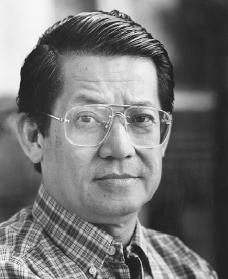
By Benigno S. Aquino, Jr.
Quezon City, MM
Reprinted from Foreign Affairs, July 1968 (Vol. 46, No. 4)
Part II of II
Continued… [ Part I ]
After “pacifying” the islands (except the hinterlands of Muslim Mindanao), America set out to refashion the Filipino. In this there was method as well as design. American teachers came first, followed by American missionaries, then by American public officials. So successful were they that the Filipinos were soon thinking, acting and living American. And so proud was the United States, it was soon calling the country America’s “showcase of democracy” in Asia. The Filipinos liked the label too, such had been the degree of their Americanization.
Filipinos, indeed, have much to thank the United States for. With “the happiness, peace and prosperity” of the Filipinos as the official colonial policy, America gave the Filipinos a new language, schools, free trade, government and laws. It strove to curb disease. It also gave the Filipinos a vigorous journalism, something Filipinos point to with pride. Branded as irresponsible at times, the Philippine press none the less has been the unofficial loyal opposition, the strongest deterrent to unbridled graft. And most important, perhaps, the United States kept the regionalist and volatile Filipinos from breaking up.
What if the United States had not come and the First Republic in 1898 had not been aborted? Philippine Ambassador to Washington Salvador P. Lopez, who, as foreign secretary, charted the Philippines’ dramatic turn away from the United States and back toward Asia, answered this way: “. . . the Philippines would have developed a political system resembling, on the one hand, the self-perpetuating oligarchies of Latin America and, on the other, the ‘guided democracy’ of Indonesia. In addition, the young republic would have been confronted almost immediately by challenges to its authority, in particular by serious separatist movements in the Visayas and in Moslem Mindanao and Sulu.” American colonial rule, he affirmed, moderated all these and permitted a new “Philippine society to develop along more democratic lines.”
What the United States fashioned, in fact, is a democratic plural society, a society that finds unity in its diversity. It is a society, some say, as American as the United States itself. It may not have the dollars, but it certainly has the tastes and habits, the wheeling’s and dealings, the idiosyncrasies and neuroses of its recent mentor. And it is—or has been—committed four-square to America, to what America stands for—more than the United States itself, perhaps. In its anti-communism, for example, Manila is more rigid than Washington.
In three wars, the Philippines has stepped forward and fought with the United States—against the Japanese in the epic holding battles of Bataan and Corregidor, against the North Koreans and Communist Chinese in Korea, against the Viet Cong and North Vietnamese now. Clearly, President Marcos voiced the Filipino sentiment when he explained why he brought the Philippines into the Viet Nam war: because, he said, the United States was already in the fray.
III
Increasingly, however, there are signs of disaffection from the United States. Where it was almost unthinkable to criticize America ten years ago, more and more Filipinos speak out today against Americans, if not America itself. The change is seen in anti-American demonstrations and in the search for new partners in Asia and in Europe. Behind it, too, is a renaissance of Filipino nationalism and a growing awareness of where the country is—in Asia. But the main reason is the failure of the United States—in Filipino eyes—to give meaning to the vaunted special relationship; American performance falls short of the promise.
In this atmosphere, the negative aspects of U.S. policy are surfacing. Approval of parity—equal rights for Americans in the exploitation of Philippine natural resources—is now seen as imposed by the United States on a people left prostrate by World War II, as a condition for American war-damage funds. “The net effect of parity,” Education Undersecretary Onofre Corpus warned the United States recently, “has been an erosion of the Filipinos’ belief in the United States’ capacity for fair dealing with her friends and allies.”
Filipinos in growing numbers now believe that the independence granted by the United States in 1946 had built-in strings designed to perpetuate American economic dominance—or “colonialism,” as the ultra-nationalists call it. And they point to the trade agreement which has kept the Philippines a supplier of raw materials for America’s mills and a market for American goods. Of course, the onerous provision of the original agreement was rewritten in the Laurel-Langley Pact of 1956, but very few Filipinos understand this refinement.
Some Filipino ultra-nationalists—not too many, but well-positioned and very articulate—would sever all special relations with the United States, putting the Philippines on the path of non-alignment. This, of course, is foolhardy. With a nuclear-armed and power-minded Communist China casting a covetous shadow over all of free Asia, the Philippines needs the United States more than ever; the only other choices left to her are to go Red or fall dead.
One truth persists here: the Philippines, like the rest of free Asia, needs America’s continued military presence in the area. Like the others, she needs America as dam and shield against the Chinese Communists. This need has never been more urgently felt than since President Johnson’s dramatic announcement at the end of March and the beginning of negotiations with the North Vietnamese. Will the United States pull out, as the French and British have done? This is the common fear of free Asians. For the Filipinos, with a million Chinese unassimilated in their midst, it is more than a fear; it is a spectre.
The Philippines today needs to make bold efforts to break away from the fetters of the past. She must review and revise her so-called special relationships with the United States, taking into account the world as it is, and ceasing to live on the myths and heroics that so welded and so sustained her in the past. The Filipinos ask simply for dignity in their relations with the United States and equality with others in the American-led community of nations. They resent the fact that Japan, a former enemy, has obtained more from the United States than has the Philippines, and that Spain, a totalitarian state, has a more favorable military bases agreement with the United States.
The Filipinos must purge—now, with finality—the cause of their past shame: U.S. puppetry. What they must seek is partnership with the United States, not wardship. If a fresh viability can be forged out of the old tissues of past kinship, so much the better. But this should be farthest from both the Filipino and American minds. A New Spirit must be infused into the Filipino-American relations of the 1970s and the years beyond. It will have to be applied to the new U.S.-Philippine treaty which will replace the Laurel-Langley preferential trade agreement expiring on July 4, 1973; and it must be applied to the new mutual defense and military bases agreements. These are the main problems that have vexed Filipino-American relations so much in the sixties; approached with a fresh outlook, they could yield a more durable Filipino-American relationship.
Happily, despite the growing swell of anti-American criticism in the Filipino press, there is no hatred for whites on the islands. This is because, it would seem, Americans neither tyrannized nor brutalized the Filipinos in their 48-year rule. In fact, Filipinos—in the main—fondly remember the Big Brother gestures and kindnesses of the GI who liberated the islands in 1945. Out in the country especially, the Americano is still as much a symbol of help, friendship and good will as ever. As before, this is a good augury.
IV
There is much to be done at home. In addition to breaking away from America’s economic dominance, the Filipinos themselves must outgrow the colonial attitude which now impedes the modernization process. Fortunately, there are many latent forces which can be energized. Anyone who has lived in the Philippines will attest to the flexibility of the Filipinos and, most of all, to their great social mobility. There is, on the whole, an openness in the society, the creation no doubt of the egalitarian ideals of the Revolution of 1896 that have slowly seeped into the whole fabric of Philippine life during the last six decades. And this can be ascribed to the public school system which the Americans themselves started, to the system of government which the Americans installed but which the Filipinos have molded to fit their own psyche and needs. We have, after all, been having democratic elections since 1911; many governments have come and gone without the chaos and bloodshed of revolutions and coups d’état.
There are perhaps more trained technicians in the Philippines today than anywhere else in Southeast Asia, but the industrial growth that can absorb these technicians has not come. Moreover, the Philippines’ natural resources are among the richest in Southeast Asia, yet we are fast falling behind such countries as Malaysia and Taiwan in industrial development. Here, again, the oligarchs must be made to move, to invest, to industrialize. They can be captains of industry, but instead they have elected to dig in their heels on the land.
Stirring the entrenched oligarchs into accepting the urgency of land reform is also one of the aims of the younger leadership which wants the Philippines to surge upward. Up to now, however, the forces of reaction have made government efforts in this direction largely meaningless. What a few years ago was a mere revolution of rising expectations has grown to the point where some fear revolution itself. It could be sparked, not by the left, the communist-inspired Huk ideologue, but by the disillusioned, depressed and dejected educated unemployed. Clearly, the Filipino élite—the corrupt and corrupting, the irresponsible and unresponsive old leadership—must face up to the need for reform or be swept away.
The new-generation Filipino must also shake and awaken the Catholic Church, which has long ignored the need for social reform and become flabby in its position of revered irrelevance. Because the Church has grown remote from the masses, quasi-religious fanatics have banded together and prospered in the countryside. Last year 31 of them—members of the Lapiang Malaya (Freedom Party) sect—were slaughtered when they demonstrated in Manila and charged the constabulary dispatched to contain them. This was as much a failure of the Church as of the government.
The government itself must be made to respond to the demands of the middle class—the innovating, the modernizing class—for a mass market. The archaic and regressive tax structure must be revamped. The wealth that the oligarchy rapaciously covets and hoards must get down to the masses in the form of roads, bridges and schools; these are what the tao understands as good or bad government.
Philippine democratic institutions, President Marcos feels, are on trial. “And they may not,” he has warned, “have a second chance to prove and sustain themselves.” The Filipino, he stresses, must realize his salvation lies within himself. With this, the opposition cannot disagree. Indeed, great dedication and great labor are demanded of the new Filipino.
All these are Filipino aspirations and frustrations that Americans must clearly understand. It is they, after all, to whom the Filipinos have always turned for guidance and assistance. In handling the Philippine problem, it will be well for the United States to remember that methods and postures that have repeatedly failed in contemporary Asia cannot any longer work in the new Philippines either. Equally, the Filipinos will do well to keep in mind that invoking the dead—if epic—past will no longer work in this age of rapid evolution. For them sentimentally to rest their future and fortune on the special Filipino-American bonds and other myths of the past is likely to be fatal.