

Examine the personal and professional profiles of Jing Quan, China’s newly-installed Ambassador to the Philippines, within the context of Xi Jinping’s promotion of Beijing’s aggressive, often pugnacious diplomacy style toward the West and its allies.
China’s Envoy Hits the Ground Running
Drawing on his extensive background in U.S.-China relations, Jing’s approach blends “harmonious messaging” with assertive defense of Chinese interests, particularly in South China Sea disputes. His methods are linked to Beijing’s recent purges of senior military and diplomatic officials who advocated caution regarding a forcible invasion of Taiwan, highlighting Xi’s consolidation of power above all else while risking major miscalculation.
Jing’s recent, eyebrow-raising activities, such as openly criticizing Philippine government officials registering their alarm over Chinese Naval activities in the West Philippine Sea and his closed-door meeting with Davao City Mayor Sebastian “Baste” Duterte, are scrutinized for their potential to exacerbate internal Philippine divisions and influence the 2028 presidential elections, where pro-China sentiments could undermine Manila’s strategic alignment with the United States.
Honed by Trump
 The appointment of Jing Quan as China’s Ambassador to the Philippines only a few months ago marks a pivotal moment in bilateral relations, occurring amid escalating tensions over the West Philippine / South China Sea regions and broader geopolitical shifts in the Indo-Pacific. As a veteran of U.S.-China diplomacy during the tumultuous “Trump ver. 1.0” era, Jing embodies Beijing’s evolving foreign policy under Xi Jinping, which emphasizes assertive nationalism, often termed “Wolf Warrior” diplomacy. This ethos, inspired by the patriotic film franchise by the same title, prioritizes confrontational rhetoric to safeguard China’s “core interests,” including territorial claims and reunification with Taiwan.
Concurrently, Beijing’s internal dynamics reveal Xi’s aggressive consolidation of power through purges of military leaders and foreign service officials skeptical of rapid escalation toward Taiwan. These developments intersect with Jing’s activities in the Philippines, such as engagements with local pro-China figures in the Philippines, which could foster allied networks and influence domestic politics ahead of the 2028 elections. Some argue that Jing’s presence amplifies risks for Philippine sovereignty and electoral integrity, potentially tilting the balance toward candidates aligned with Beijing’s interests.
Jing Quan’s Background and Diplomatic Trajectory
Jing Quan, born in July 1975 in Hancheng, Shaanxi Province, holds a bachelor’s degree in English from Xi’an International Studies University and a master’s in international relations. A member of the Communist Party of China since entering the foreign service in 1997, his career has been steeped in high-stakes bilateral engagements. Early postings included an attaché role at the Chinese Embassy in Thailand, followed by significant assignments in the United States.
From 2014 to 2021, Jing served as Deputy Chief of Mission at the Chinese Embassy in Washington, D.C., navigating the U.S.-China trade war and strategic rivalries during the first Trump administration. Prior to his Manila posting, he was Deputy Director-General (2018–2021) and later Director-General in the Ministry of Foreign Affairs’ Department of North American and Oceanian Affairs, positioning him as a key architect of Beijing’s responses to Western alliances.
Analysts describe Jing as a “soft-spoken pragmatist” and “experienced American hand,” contrasting with more overtly aggressive diplomats. Yet his tenure in the Philippines has seen a firm stance on safeguarding China’s “national interests and dignity,” as articulated upon his arrival. This background equips Jing to manage complex relations with a U.S. ally like the Philippines, where increased American military access under the Enhanced Defense Cooperation Agreement (EDCA) has intensified Beijing’s concerns.
Adherence to Wolf Warrior Diplomacy Under Xi Jinping
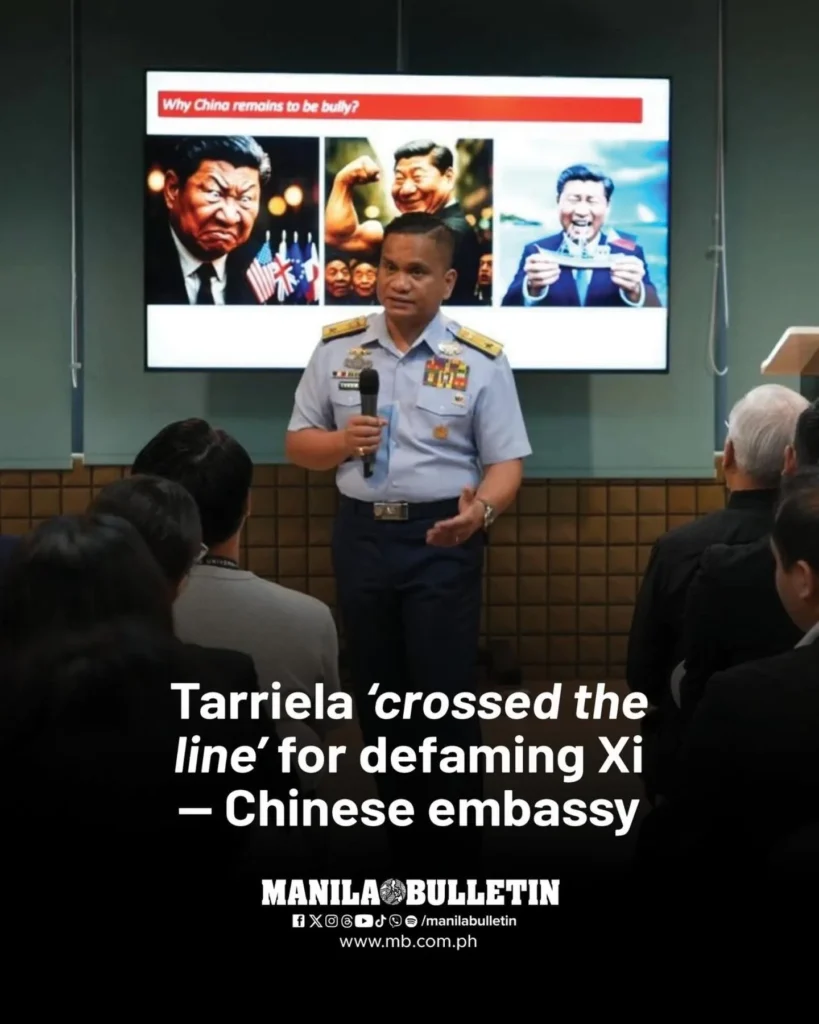
Xi Jinping’s foreign policy doctrine has institutionalized Wolf Warrior diplomacy since the late 2010s, shifting from Deng Xiaoping’s “hide and bide” strategy to a more assertive posture. This approach involves confrontational public statements, social media campaigns, and diplomatic pressure to counter perceived threats to China’s sovereignty. In the Philippines, Jing’s embassy has exemplified this through aggressive rebuttals to Philippine officials, such as demands to “hold accountable” Coast Guard spokesperson Commodore Jay Tarriela for transparency efforts on Chinese harassment actions in the West Philippine Sea.
The embassy’s January 2026 meeting with Mandarin-language media executives urged them to promote Beijing’s narratives, including the Belt and Road Initiative, revealing a coordinated propaganda effort. Statements accusing Philippine senators like Risa Hontiveros of pursuing “political gains” ahead of elections further illustrate this tactic, framing criticism as self-serving rather than principled. While Jing is portrayed as less bombastic than predecessors like Huang Xilian, his actions align with Xi’s ethos, blending faux bridge-building rhetoric with unyielding defense of territorial claims.
Beijing’s Purges of Officials Cautious on Taiwan Invasion
Xi’s military modernization mandate aims for PLA readiness to invade Taiwan by 2027 (the PLA’s centennial year), a timeline that has prompted internal dissent. A few weeks ago, Beijing announced investigations into Central Military Commission (CMC) Vice Chairman Zhang Youxia and Joint Staff Chief Liu Zhenli for “serious violations of discipline and law,” including corruption and undermining Xi’s authority. These purges, part of a broader campaign affecting dozens of generals, target respected figures who reportedly advised caution on forcible reunification.
The removals reduce the CMC to Xi and one other member, concentrating power and risking sycophantic advice that could lead to mistakes. Analysts suggest this may delay near-term aggression but heighten risks from mid-2027 through 2030, as Xi installs loyalists focused on accelerating readiness. In the Philippine context, such instability could embolden Beijing’s hybrid tactics in the South China Sea, using diplomacy and influence operations as proxies for direct confrontation.
Jing Quan’s Activities and Potential Challenges for the Philippines
Jing’s engagements in the Philippines underscore Beijing’s strategy to cultivate local alliances amid national tensions. His January 26th meeting with Davao City Mayor Baste Duterte focused on “local-level cooperation, partnerships, and people-to-people exchanges.” This visit, alongside trips to Cebu, occurs against a backdrop of embassy criticisms of Philippine officials, prompting “persona non grata” declaration calls on Jing himself.
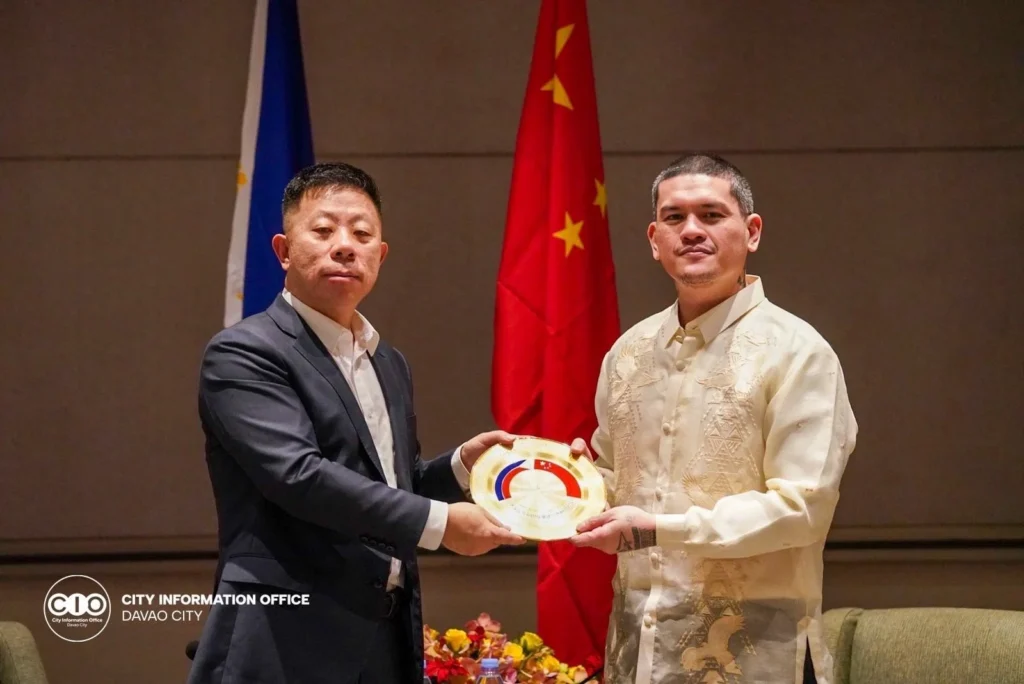
Such interactions exploit the Marcos-Duterte feud, with the Dutertes historically favoring closer China ties under former President Rodrigo Duterte. Vice President Sara Duterte, Baste’s sister and the current 2028 frontrunner, has criticized President Ferdinand Marcos Jr.’s pro-U.S. pivot, aligning instead with Beijing’s preferences. The embassy’s social media campaigns, which have posted nearly 400 South China Sea-related messages since 2022, aim to erode support for Manila’s positions and normalize Chinese control.
These activities pose risks. They could deepen internal divisions, amplify disinformation (i.e., via fake social media accounts paid for by the embassy), and influence voters toward pro-China candidates. Security experts warn of Chinese sleeper agents shaping the 2028 electoral landscape through funding of efforts and narratives that undermine U.S. alliances.
Eye on Jing
Ambassador Jing Quan’s role in the Philippines exemplifies Xi’s Wolf Warrior diplomacy, merging apparent pragmatic engagement with assertive posturing. Linked to Beijing’s purges of Taiwan-skeptical officials, this approach heightens regional instability. His interactions, particularly with figures like Baste Duterte, threaten to interfere in Philippine politics, potentially swaying the 2028 elections toward outcomes favorable to China. To mitigate these risks, Manila must bolster counter-disinformation efforts and diplomatic unity, ensuring that electoral processes remain insulated from external influence. Failure to do so could compromise Philippine sovereignty and alter the Indo-Pacific balance.
[…] two-part Beitrag on manipulative tactics employed by the Chinese embassy in Manila under its new Ambassador Jing Quan – questions are now being posed as to where loyalties really lie in a post-Duterte Philippines. […]
Aggression like this will only result in further isolating Beijing. Bullies never win.