
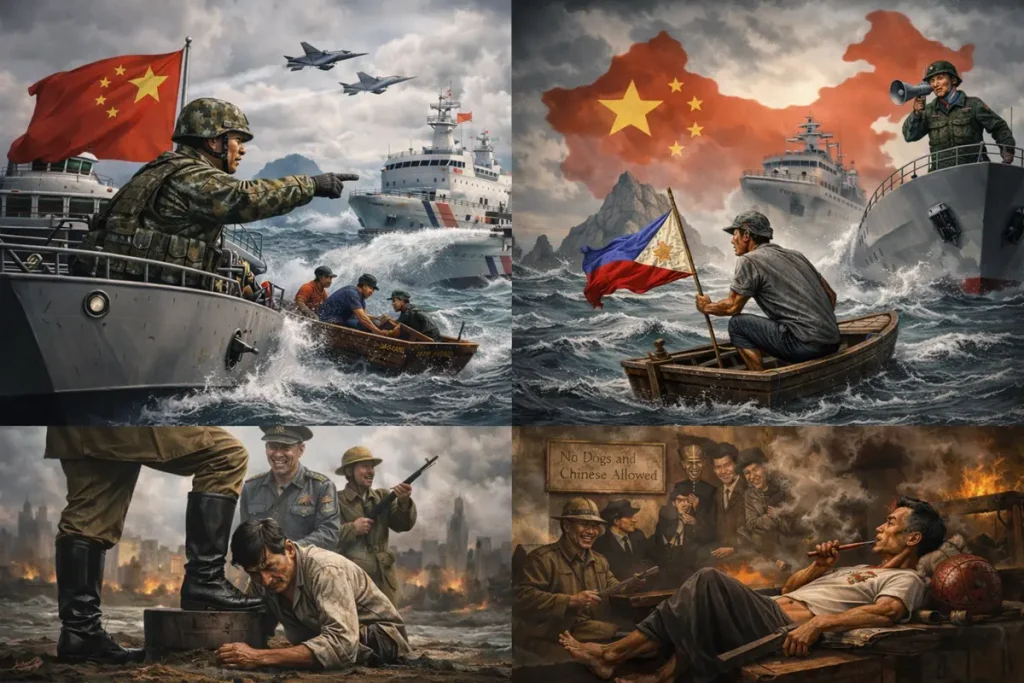
Nouveaux Chinese obnoxiousness has, unfortunately, become something we are today quite used to seeing since Xi Jinping became Beijing’s supreme leader, steering his government toward a so-called “Wolf Warrior” (from the Wolf Warrior films of 2015 and 2017 that portray heroic PLA soldiers protecting Chinese nationals abroad from evil white people) diplomatic stance that is meant to pose as a deterrence against Western aggression.
Gone are the days when Americans would be given the Xuèfú when opening a business in Shanghai or Dalian. Now, hitherto forbidden expressions like yáng guǐzi and bái pí zhū can be heard muttered by average Chinese in hotels or on subways when people from New York or London appear. The reasons behind this transformation are complex, stretching back more than 170 years.
China’s “Century of Humiliation”
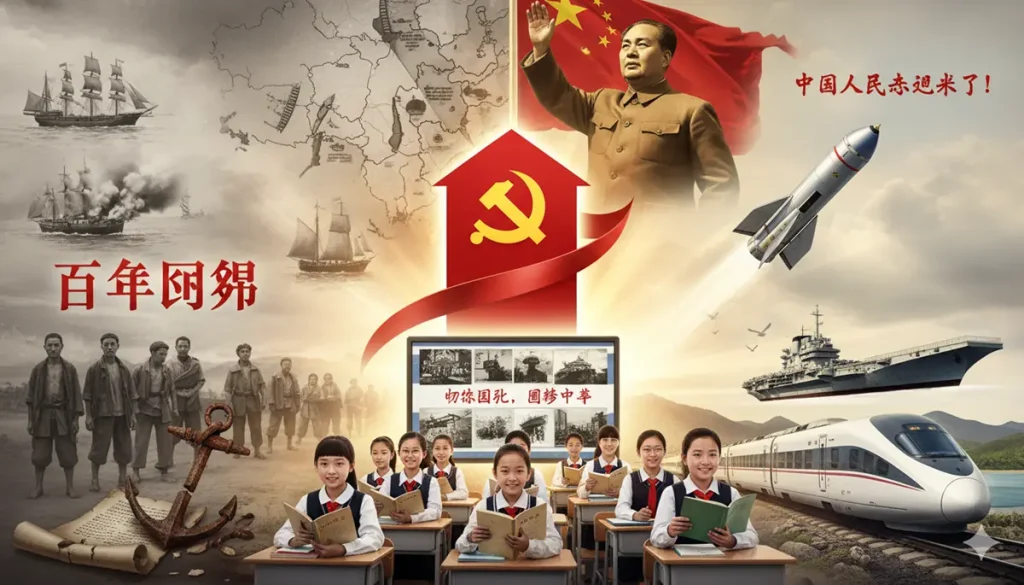
The CCP has institutionalized a powerful official history known as the Century of Humiliation (roughly 1839–1949). This frames modern Chinese history as a long period of weakness, defeat, and exploitation by foreign powers (starting with the Opium Wars, unequal treaties, territorial losses, Japanese invasion, etc.), ending only when the CCP founded the People’s Republic of China in 1949 and “stood up” the nation.
This narrative was amplified after the 1989 Tiananmen protests to rebuild legitimacy when communist ideology lost appeal. It portrays China as an eternal victim of external meddling, with the CCP as the sole savior that ended foreign domination and restored dignity.
Under Xi Jinping, it has become even more central, integrated into education (via the 2023 Patriotic Education Law), museums, media, and speeches. It contrasts past weakness with today’s rise, framing any challenge to Chinese interests as a threat to prevent renewed humiliation.
This creates a deep-seated “chip on the shoulder”, a collective sense of historical grievance and determination never to be weak or disrespected again. It fuels sensitivity to even minutely-perceived slights and justifies a posture of strength and non-compromise.
Insults and “Wolf Warrior” Diplomacy
The aggressive online and diplomatic rhetoric (i.e., insulting other countries’ citizens, accusing them of arrogance or interference) is partly a projection of this victimhood-turned-vindication mindset. It rallies domestic nationalism by portraying China as finally powerful enough to push back against perceived disrespect. When foreign entities criticize China (on human rights, COVID, etc.), it is framed as continuation of historical intimidation, triggering defensive-aggressive responses.
Bullying in the South China Sea and Toward Smaller Neighbors
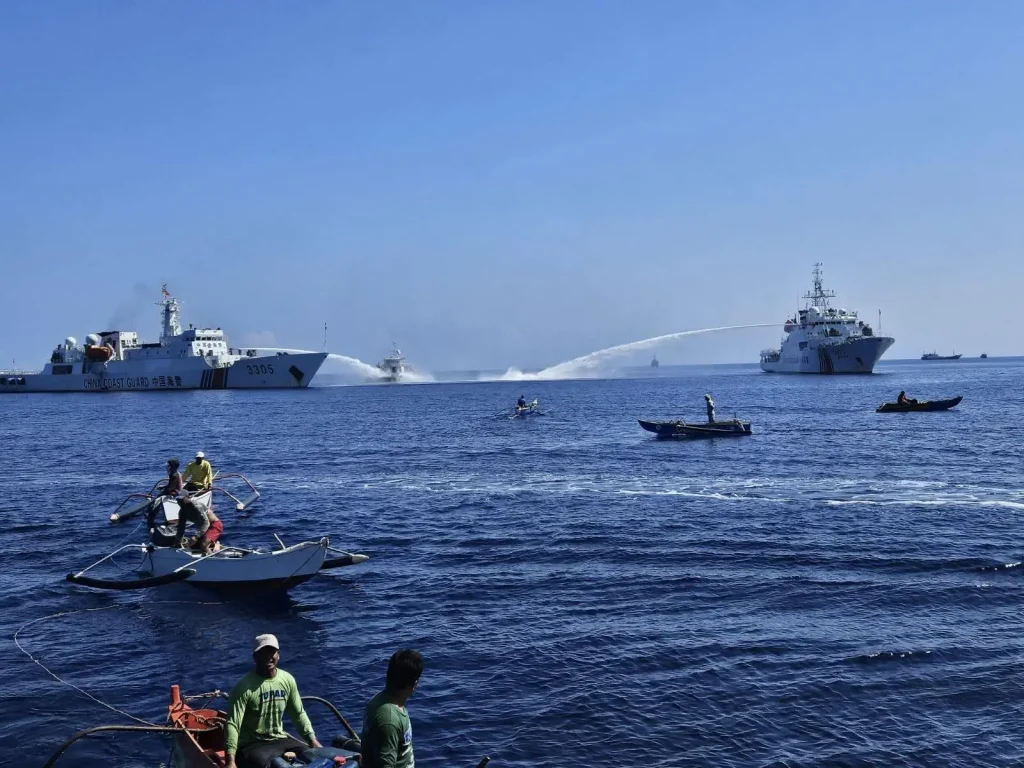
Actions like water-cannoning Philippine vessels, ramming fishing boats and PCG cutters, blocking resupply at Second Thomas Shoal, or coercing fishermen at Scarborough Shoal fit into this framework but also serve practical goals:
- Strategic control— The South China Sea is vital for trade routes, fisheries, petroleum resources, and military projection (breaking out of the “first island chain”). Control helps secure China’s periphery and counters perceived U.S. containment.
- Historical claims— Beijing invokes vague “historic rights” (referencing ancient voyages like that of Zheng He) via its “nine-dash line”, rejecting the 2016 Hague ruling as illegitimate. This ties back to the humiliation narrative of reclaiming what was “lost” or denied during weakness.
- Nationalism and deterrence— Assertiveness demonstrates to the domestic audience that China no longer tolerates “unallowed incursions” by smaller states (posing as victims themselves). It also tests how far China can go without strong pushback, gradually eroding others’ presence (“salami-slicing”).
- Asymmetry— China’s size and power allow it to treat smaller neighbors (Philippines, Vietnam, etc.) as lesser entities, sometimes framing them as proxies of Western powers trying to contain China, echoing historical grievances.
In short, the CCP uses the humiliation narrative to legitimize its rule, mobilize nationalism, and justify never yielding on “core interests” like maritime claims. This creates a cycle outlined as historical trauma → present strength → zero-sum defense of sovereignty → coercive actions against perceived challengers → further alienation of neighbors.
Though not universal thinking among Chinese people (most are pragmatic or uninterested in foreign policy), the state-controlled system amplifies the most nationalist of voices. Analysts note it risks backfiring by pushing countries toward the U.S. and allies, but Beijing perceives the domestic political benefits (unity, regime support) and strategic gains as an advantage for Xi’s leadership.
Risking it all by attempting to invade Taiwan would test that hypothesis to the limit. Lessons from Tokyo’s experience with the Philippines should serve as a proverbial “Durian Football” were the Chinese to think about attacking Manila.