
Park the Ark – Literally
The relentless alternation between devastating floods and prolonged droughts has become a defining feature of daily life and politics from Myanmar to the Philippines. Monsoons dump extreme rainfall that overwhelms rivers and cities, while El Niño-driven dry spells shrivel crops, reservoirs, and livelihoods. These swings, intensified by a warming climate, are colliding with rapid population growth and lagging investments in flood control and water storage. The result is mounting political pressure on governments, repeated societal disruptions, and a growing sense among ordinary people that long-term personal stability may lie overseas – particularly in Western countries.
Southeast Asia ranks among the world’s most hazard-prone regions. Floods have accounted for more than 60 percent of disaster events in recent years, affecting tens of millions and causing hundreds of billions in damages to capital stock. Droughts, historically recurring every few years, have grown more severe; studies project that up to 96 percent of the ASEAN region could face drought conditions, with extreme drought affecting as much as 64 percent.
Recent years illustrate the pattern. In late 2025, extreme rainfall linked to La Niña and a negative Indian Ocean Dipole produced deadly flooding and landslides across Indonesia’s Sumatra (killing well over 1,000 people in some tallies), southern Thailand, Vietnam, Malaysia, and the Philippines. Typhoons and successive storms displaced hundreds of thousands and destroyed homes, roads, and farmland. This year, governments have been preparing for a projected “super” El Niño that could bring prolonged drought, extreme heat, agricultural losses, and haze from fires, followed later by intense “rain bombs” capable of triggering rare, high-magnitude floods and landslides.
Population Increases Outpace Infrastructure
ASEAN’s population has grown substantially and continues to urbanize rapidly. More people live in flood-prone lowlands, coastal zones, and informal settlements with inadequate drainage. Natural floodplains have been paved over or developed, while deforestation has reduced the landscape’s ability to absorb water. Water catchment and storage systems have not kept pace. Cambodia’s per capita reservoir storage remains extremely low compared with Thailand or Vietnam, leaving communities highly exposed. In Thailand, responsibility for water management is fragmented across dozens of agencies with limited coordination. Indonesia has seen repeated flash floods and landslides tied in part to forest loss from concessions.
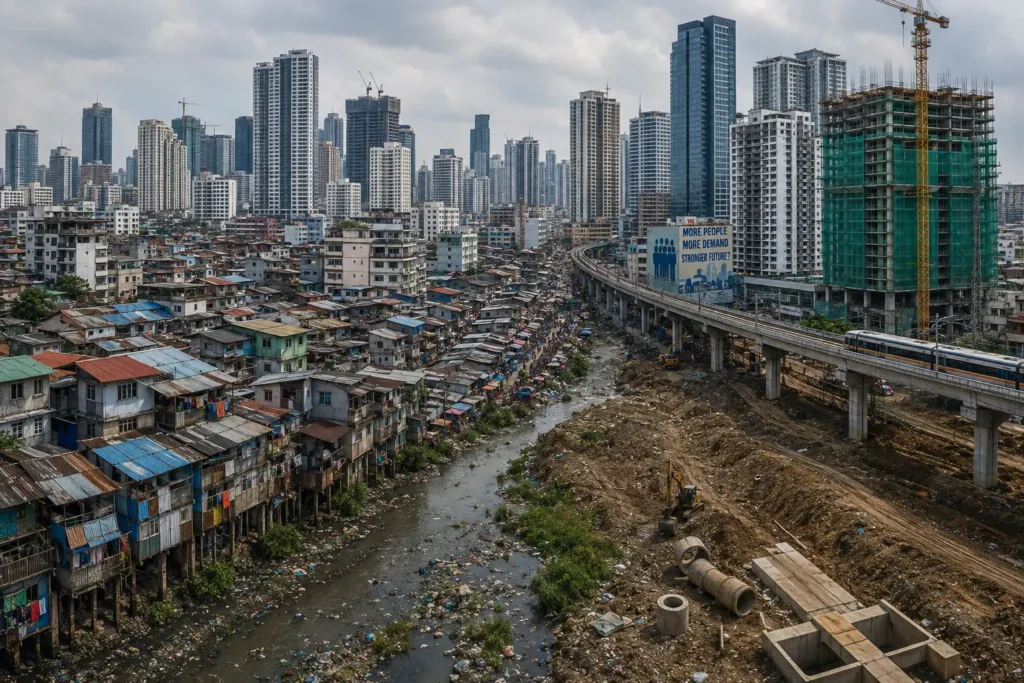
Governments have poured money into mitigation. Malaysia has accelerated multi-billion-ringgit flood projects, Indonesia has distributed pumps and rehabilitated irrigation. The Philippines continues disaster-risk investments, but the scale of need grows faster than delivery. Aging or incomplete drainage, limited storage, corruption and weak enforcement of land-use rules leave cities and rural areas vulnerable when extremes hit. Transboundary issues compound the problem: dams and development along the Mekong alter flows, reduce sediment, and intensify both drought and flood risks for downstream communities in Laos, Cambodia, Thailand, and Vietnam.
Political and Social Fallout
Repeated failures to protect citizens is inducing civil unrest. In the Philippines, public demonstrations have targeted corruption and mismanagement in flood-control projects after communities were inundated. Indonesian authorities faced criticism for delayed or limited national-level emergency declarations after the Sumatra disasters, constraining the speed and scale of aid. Across the region, leaders confront accusations of inadequate preparedness even as they mobilize military units, task forces, and emergency budgets.
Economic losses in agricultural output, infrastructure damage, and disrupted supply chains feed broader discontent. Livelihoods dependent on farming, fishing, and small trade are repeatedly disrupted, raising food insecurity and poverty risks in already vulnerable areas. These pressures do not automatically produce regime change, but they amplify existing tensions, strain local governance, and create openings for political rivals or public frustration. Climate impacts interact with inequality, weak institutions, and development choices, raising the stakes for social cohesion.
Getting Out of Dodge
For many households, the cumulative toll of lost harvests, destroyed homes, insurmountable debt, elite indifference and repeated displacement makes staying increasingly untenable. Disaster-induced and climate-related mobility is has been common in Southeast Asia for decades, but now more and more human lives are in the way. Slow-onset stresses such as prolonged water scarcity more often lead to permanent migration. Internal moves to cities is the most frequent response, yet international tranfers are also rising as people seek safer and more well-governed environments.
Western countries remain powerful magnets because of higher wages, stronger social safety nets, and perceptions of greater long-term security. Climate stressors do not act alone but they lower the threshold for deciding to leave. Analysts and international organizations have documented the climate-migration nexus across ASEAN and project that weather-related pressures will contribute to higher emigration flows in coming decades alongside population growth.
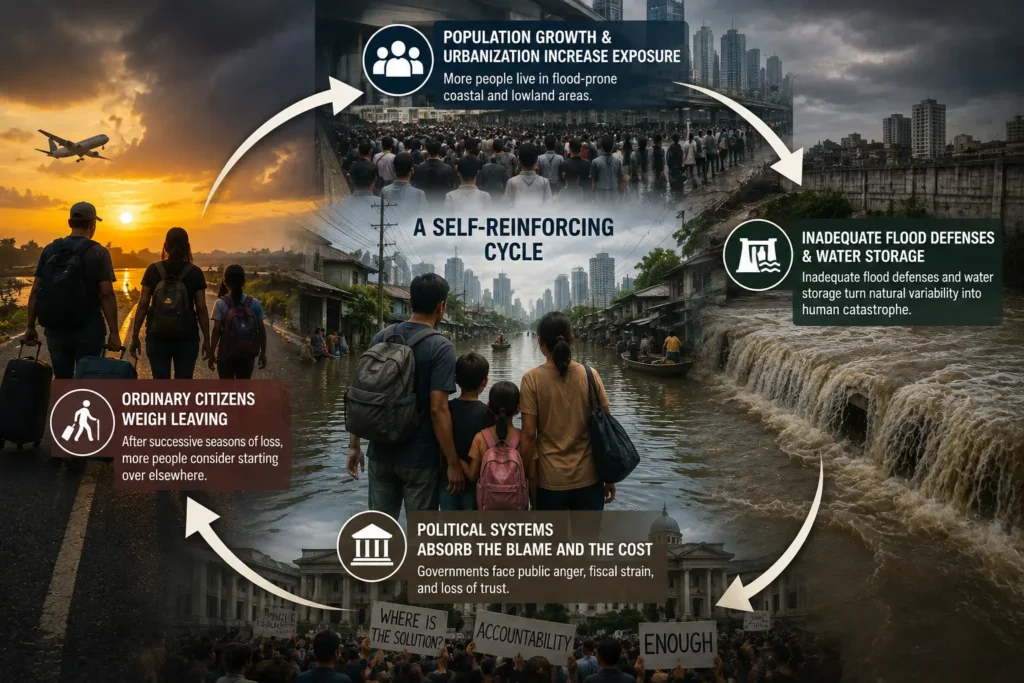
The cycle is self-reinforcing. Population growth and urbanization increase exposure. Inadequate flood defenses and water storage turn natural variability into human catastrophes. Political systems absorb the blame and costs. Ordinary citizens, after successive seasons of loss, increasingly weigh the possibility of starting over elsewhere. Without faster, better-coordinated investment in resilient infrastructure, nature-based solutions, and adaptive governance, the region faces not only higher disaster bills but deeper brain drain, societal instability and continued outward pressure on its peoples.