
Unwanted Guests
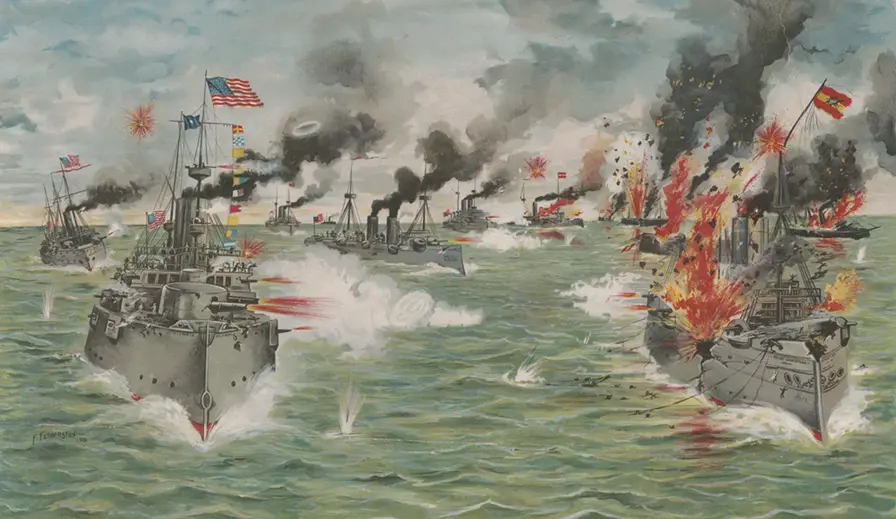
The Spanish-American War of 1898 marked a pivotal shift in global power dynamics, transforming the United States into a Pacific imperial power while exposing the limits of European colonial ambitions. A lesser-known but significant episode unfolded in Manila Bay following Commodore George Dewey’s decisive victory over the Spanish Pacific Squadron on May 1, 1898. Imperial Germany dispatched its powerful East Asia Squadron under Vice Admiral Otto von Diederichs, ostensibly to protect limited commercial interests but with clear exploratory ambitions toward acquiring the Philippines or portions thereof from a weakened Spain.
The resulting naval standoff – often characterized as a “cold war” between Dewey and Diederichs – was a combination of German provocations, American countermeasures, and the ultimate resolution that enabled U.S. acquisition of the archipelago via the Treaty of Paris. Drawing on contemporary naval accounts, the incident illustrates emerging U.S.-German naval rivalry and the assertion of American hegemony in the western Pacific.
The War
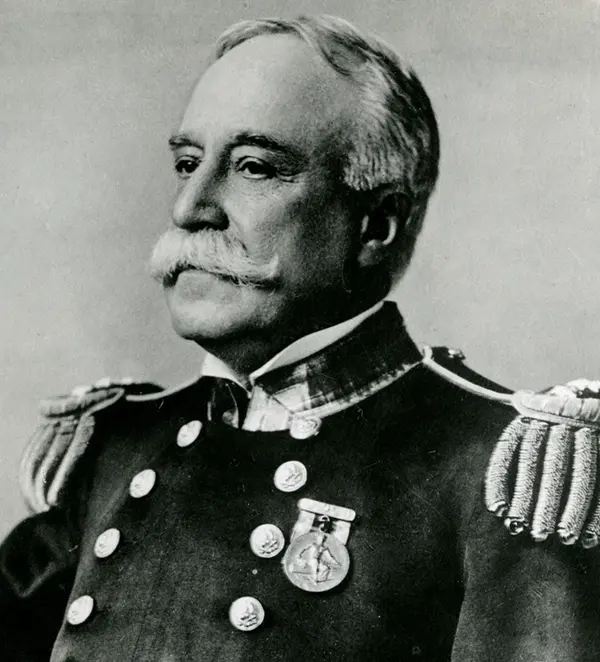
The Spanish-American War erupted in April 1898 amid U.S. outrage over the sinking of the USS Maine and support for Cuban independence. While the Caribbean theater dominated headlines, the Pacific theater proved equally transformative. Commodore George Dewey’s Asiatic Squadron destroyed the Spanish fleet in Manila Bay on May 1, 1898, in a one-sided engagement that eliminated Spanish naval power in the region and left the Philippines vulnerable.
In the power vacuum, European imperial states observed closely. Germany, under Kaiser Wilhelm II’s Weltpolitik, actively sought coaling stations and colonies in Asia and the Pacific to rival Britain and others. Having recently leased Jiaozhou Bay in China, Berlin viewed the Philippines (amid an ongoing Filipino revolution against Spain) as a potential acquisition through purchase or opportunistic intervention. The arrival of a German naval squadron in Manila Bay shortly after Dewey’s victory created a tense standoff that tested American resolve without escalating to open conflict.
Colonial Ambitions
By the late 19th century, Germany had joined the scramble for overseas territories. The Kaiser pursued an aggressive naval and colonial policy, dispatching squadrons to probe opportunities. In early 1898, as tensions between the U.S. and Spain mounted, Germany anticipated Spain’s potential defeat and the possibility of purchasing the Philippines outright or securing key ports.
German officials had already pressured China for concessions and saw the Philippine uprising as an opening. Vice Admiral von Diederichs, commander of the German East Asia Squadron, was ordered to the region to safeguard German nationals (primarily a handful of trading firms) but also to position Germany favorably for postwar negotiations. The presence of a transport ship carrying 1,400 ground troops underscored the squadron’s potential for more than observation.
The Blockade
Dewey’s squadron, comprised of the USS Olympia (flagship), Baltimore, Boston, Raleigh, Concord, Petrel, and auxiliaries, entered Manila Bay under cover of darkness on April 30–May 1, 1898. In hours, it annihilated the outdated Spanish squadron under Rear Admiral Patricio Montojo, with negligible U.S. losses.
Dewey established a blockade of Manila, controlling the bay while awaiting ground troops. Foreign warships from Britain, France, Japan, and Germany soon arrived to monitor events and protect nationals. However, the German contingent stood out for its size and conduct.
Prussian Provocations
Initial German ships (the cruisers Irene and Cormoran) entered soon after the battle. The Irene ignored blockade protocols, prompting a U.S. shot across her bow. The Cormoran attempted a nighttime entry, again halted by warning fire from the USS Raleigh. These incidents set a pattern of testing American authority.
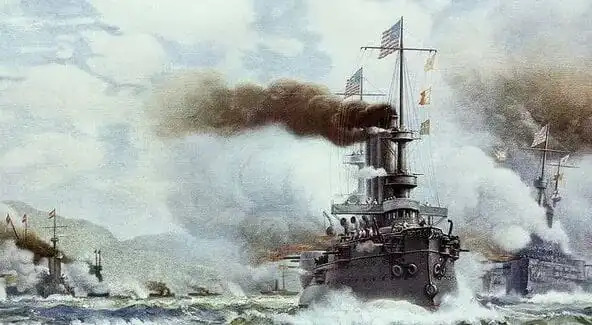
On or about May 23, Vice Admiral Otto von Diederichs arrived aboard the modern cruiser Kaiserin Augusta, accompanied by the cruisers Kaiser and Prinz Wilhelm (later reinforced by others), a collier, and the troop transport. The squadron’s combined firepower temporarily outgunned Dewey’s force.
Von Diederichs saluted the Spanish authorities first upon entering, then offered a reduced salute to Dewey, who declined to return it fully, asserting U.S. primacy under the blockade. When Dewey personally inquired about the large assembly, von Diederichs replied stiffly: “We are here by order of the Kaiser, Sir.”
German vessels engaged in provocative actions such as frequent comings and goings that disregarded blockade signals (especially at night), alleged communications with Spanish officials, assistance in fortifying Spanish positions, and landing parties for drills near Spanish-held areas. One German launch approached without lights, prompting Dewey to order warning fire. Dewey later warned a German officer that repeated violations could result in the loss of the vessel and crew.
The Standoff
Tensions escalated into a de facto “cold war.” Dewey, outnumbered initially but reinforced by arriving U.S. troops and ships, maintained firm control. In one notable exchange, after repeated provocations, Dewey instructed a German officer, “And you may tell Admiral von Diederichs again that if he wants a fight, I’ll be ready for him in half an hour.” Von Diederichs, without the ability to communicate with Berlin, wisely stood down.
British naval presence, particularly HMS Immortalité under Captain Chichester, played a stabilizing role. British officers signaled support for the Americans, and during the final assault on Manila British ships positioned themselves between U.S. and German forces.
The Resolution
By early August 1898, U.S. ground forces had arrived, and Dewey announced an imminent attack on Manila. Foreign warships were advised to withdraw; most complied. On August 13, U.S. forces captured the city in a largely bloodless “sham battle” coordinated with Filipino forces that allowed the Spanish to save face.
The German squadron formed across the American advance but was intercepted by British vessels; no shots were exchanged. Germany fired no salute when the U.S. flag was raised.
News of the U.S. purchase of the Philippines from Spain soon thereafter dashed German hopes. Von Diederichs departed without further incident. The Kaiser later acquired other Spanish Pacific territories but gained no foothold in the Philippines.
Historical Significance
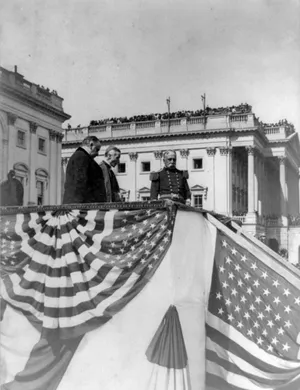
The “Manila Bay German Incident” of 1898 was a microcosm of shifting imperial dynamics. It demonstrated U.S. naval assertiveness and Dewey’s diplomatic firmness, foreshadowing America’s emergence as a Pacific power and early strains in U.S.-German relations that would culminate in World War I. For Germany, the episode highlighted the risks of overreach against a determined rival. For the Filipinos, it facilitated the end of Spanish rule, setting the stage for the Philippine-American War.
Ultimately, the confrontation underscored a key lesson of modern naval strategy: superior resolve and timely reinforcement can deter a stronger force lacking clear political backing. The “cold war” in Manila Bay helped secure American control of the Philippines without a second naval battle, cementing the United States’ position in the Pacific at the dawn of the 20th century.
In view of well-documented atrocities and abuses committed by the Germans on their island holdings in the Pacific, where thousands were raped, killed or forced into slave labor on New Guinea, the Bismarck Archipelago, Bougainville, Nauru, the Marshall Islands, the Caroline Islands, the Northern Mariana Islands, Palau, and western Samoa, Filipinos most definitely got the better end of the deal with America.