
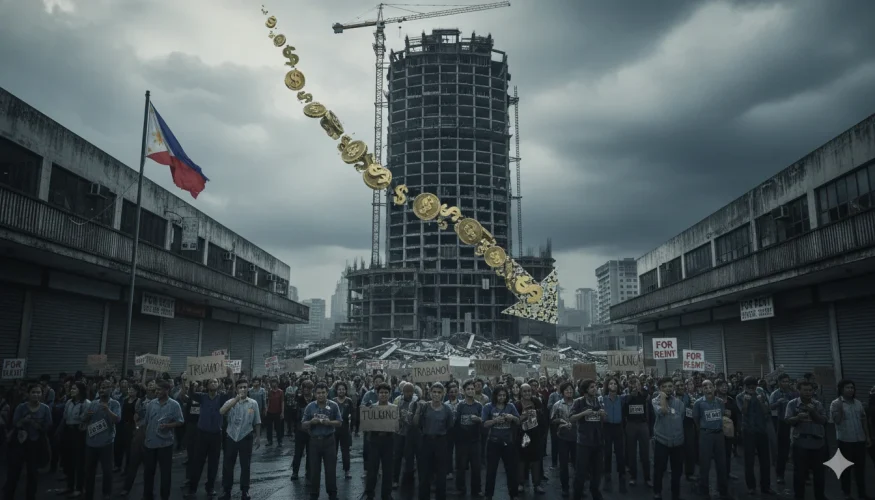
Below is a year-by-year breakdown of annual net FDI inflows (in billions of USD), based on available historical data up to 2023. Note that 2024 and 2025 figures are incomplete but show monthly and cumulative declines (down 22% overall from January to August 2025).
| Year | Net FDI Inflows (Billion USD) | Change from Previous Year |
| 2016 | 8.28 | Baseline from PNoy Admin |
| 2017 | 10.26 | +23.9% (Commitments from PNoy Admin) |
| 2018 | 9.95 | -3.0% (1st year reaction to Duterte) |
| 2019 | 8.67 | -12.9% (2nd year reaction to Duterte) |
| 2020 | 6.82 | -21.3% (3rd year reaction to Duterte) |
| 2021 | 11.98 | +75.7% (artificial snapback after Covid) |
| 2022 | 9.49 | -20.8% (4th year reaction to Duterte) |
| 2023 | 9.12 | -3.9% (1st year lack of confidence under BBM) |
Key Reasons for the Decline
The drop in FDI since 2017 stems from a combination of persistent domestic challenges and evolving external factors. These have made the Philippines less competitive compared to ASEAN peers like Singapore, Indonesia, Malaysia, and Thailand, where FDI inflows have often grown or remained more stable. Below are the main drivers based on reports from sources like the U.S. State Department, UNCTAD, World Bank, and local analyses:
Structural and Institutional Barriers

Long-term issues in the investment climate have deterred foreign investors by increasing costs and risks:
- Restrictions on foreign ownership: The 1987 Philippine Constitution and subsequent Foreign Investment Act limit foreign equity to 40% in key sectors like public utilities, education, mass media, mining, and natural resources. This caps full control in areas such as manufacturing of explosives, private security, and marine resources, making the market less attractive compared to more open economies. Foreigners are also unable to purchase land atop which factories or even primary residences might be constructed – Condos can be bought, but not the land on which the building sits.
- Inadequate infrastructure: High electricity costs, slow internet, severe traffic congestion in cities like Manila, and port bottlenecks raise operational expenses and logistics challenges. Airfreight costs are generally 10-15% higher than in other ASEAN countries, and airports are either mis-managed and thus operate inefficiently with limited destinations or stifled by local political entities fighting over turf.
- Bureaucratic and regulatory hurdles: An opaque, highly corrupt, inconsistent regulatory environment – particularly at the local government levels, slow business registration (averaging 28 days across multiple agencies), and ambiguous rules in many sectors create unpredictability. The judicial system is slow and frequently corrupt, ranking poorly in contract enforcement (136 out of 190 countries in World Bank metrics).
- Corruption and lack of transparency: Widespread graft in public and private sectors, with the Philippines scoring low on Transparency International’s index (101 out of 175 in 2017), erodes investor confidence. Recent scandals, including those in government agencies, have further amplified this in 2025.
These factors were already hindering FDI by 2017-2018, contributing to the initial post-peak decline despite strong GDP growth (around 6-7% annually pre-pandemic).
Political and Policy Uncertainty
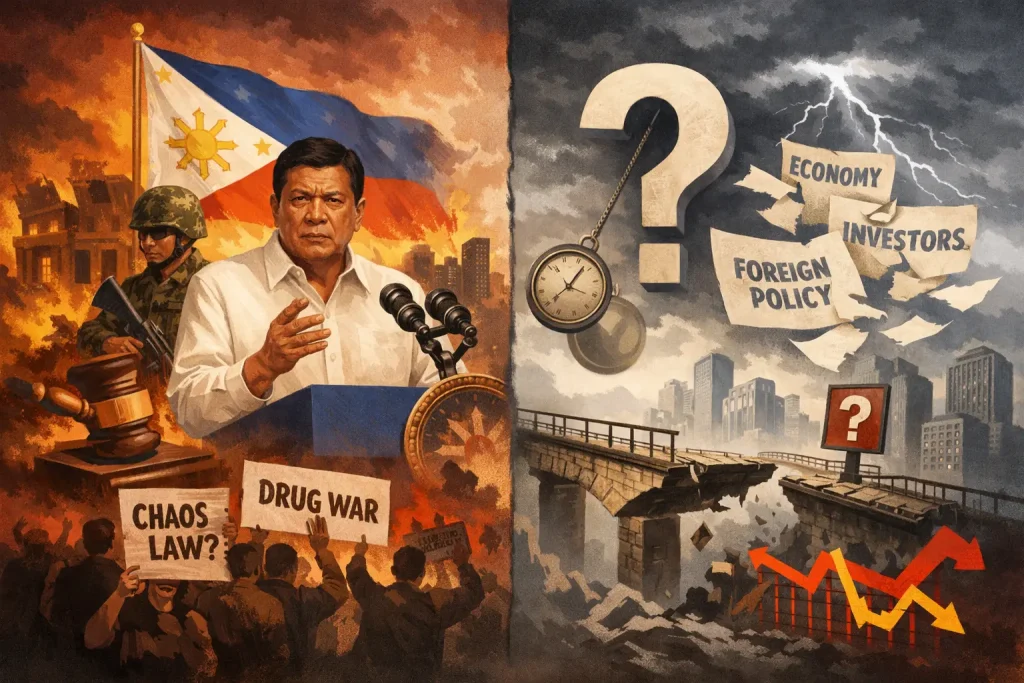
Shifts in leadership and governance have played a significant role:
- Concerns during the Duterte administration (2016-2022): Investors grew wary of President Rodrigo Duterte’s policies, including his aggressive drug war, human rights issues, and unpredictable foreign relations, leading to nervousness and reduced inflows starting in 2018.
- Ongoing policy gaps and instability: In recent years, lingering uncertainties, such as inconsistent enforcement of reforms and factional political tensions, have prompted firms to delay expansions. This has been exacerbated by corruption probes and weak business confidence in 2025.
Domestic Economic Pressures
Internal financial dynamics have accelerated outflows:
- Increased debt repayments and shifts in investment types: A major driver of recent declines (2024-2025) has been higher repayments by Philippine firms to foreign investors, turning net debt instrument investments into outflows. For instance, debt investments fell 73.8% in August 2025 compared to 39.4% in July.
- High inflation and interest rates: Domestic inflation, coupled with elevated borrowing costs, has squeezed profitability and discouraged new commitments.
- Extreme weather and other risks: Events like typhoons have disrupted operations and added to economic volatility, impacting investor sentiment.
Global and External Influences
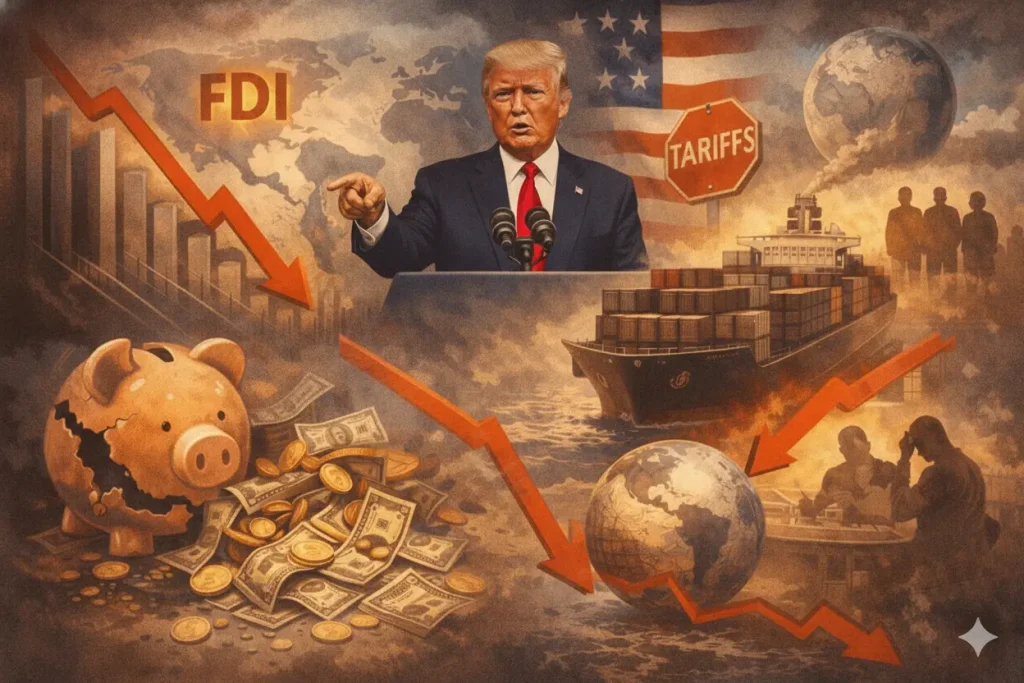
Broader international trends have compounded local issues:
- Global FDI slowdown: Worldwide inflows fell 11% in 2024, affecting Asia (down 3% overall), with factors like geopolitical tensions and economic risks spilling over to the Philippines.
- U.S. policy impacts: Donald Trump’s protectionist trade agenda and potential policy shifts have unsettled investors, particularly in trade-dependent sectors, contributing to declines in mid-2025.
- Weak global demand: Reduced exports due to sluggish international markets and China de-coupling have lowered growth prospects, further deterring FDI.
Despite reforms like easing some ownership caps since 2022 and increasing land lease lengths to 99 years last year, these challenges have persisted, leading to calls for stronger infrastructure investment, anti-corruption measures, and policy stability to reverse the trend. With a looming, well-covered face-off between the Marcos and Duterte clans upcoming in May of 2028, however, there may be little in the way of new excitement manifested among foreign firms that remain interested in the Philippines anytime soon.