
MANILA — Speaking as ASEAN chair at the 4th ASEAN Women Leaders’ Summit on 29 September 2026, President Ferdinand Marcos Jr. told the region that women remain marginalized in politics and board rooms. He urged member states to open pathways into decision-making and treat women’s leadership as “the core driver of our security, resilience and prosperity.”
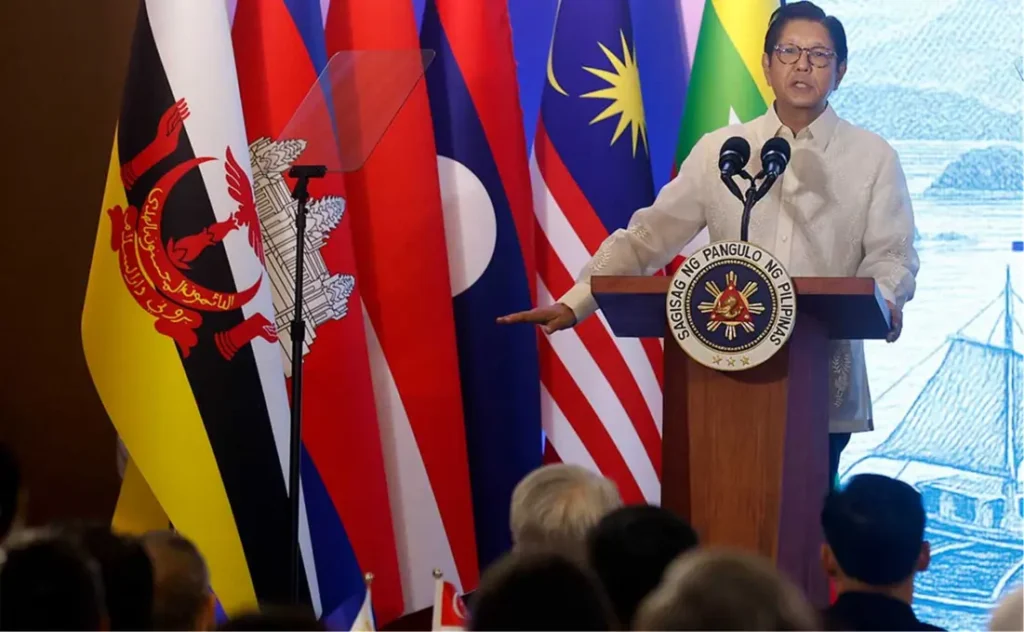
The speech is accurate as a diagnosis. The numbers, however, show how uneven and structurally sticky the problem is, and how far most of ASEAN still sits from both the global average compared to established Western democracies that routinely post 30 – 46 percent female legislators.
ASEAN legislatures vs Western democracies
As of January 1st, women held 27.5 percent of parliamentary seats worldwide, according to the Inter-Parliamentary Union (IPU). Asia as a whole lagged at 22.2 percent. Southeast Asia’s own average sits in the low-to-mid 20s.
Country-level figures for lower or single chambers (or the nearest equivalent) compiled from IPU (Inter-Parliamentary Union) – aligned 2026 data:
ASEAN (and Timor-Leste, frequently grouped in regional tallies)
- Timor-Leste: 35.4%
- Singapore: 32.3%
- Vietnam: 31.6%
- Philippines (House): 28.3% (Senate 20.8%)
- Indonesia: 22.2%
- Laos: 22%
- Thailand (House): 19.8% (Senate 22.5%)
- Cambodia (National Assembly): 13.6% (Senate 19.4%)
- Malaysia (Dewan Rakyat): 13.6% (Dewan Negara 17.2%)
- Brunei (Legislative Council): 11.4%
- Myanmar: no functioning elected legislature (junta-era suspension)
Selected Western democracies (lower/single house or combined where noted)
- Australia: 46% (House, 2025 election)
- Iceland / Finland: ~45–46%
- United Kingdom: 40.6% (House of Commons)
- France: ~36%
- Canada: ~30% House / higher in Senate
- Germany: ~32–33%
- United States: ~31-32% of Congress
Europe’s regional average is 32.3 percent; the Americas sit at 35.6 percent. Nordic countries and several Westminster and continental systems therefore still run 10–20 points ahead of most ASEAN legislatures. Singapore, Vietnam and the Philippine House are the regional exceptions that approach or slightly exceed the world mean, but they do not approach the Nordic or Australian band.
Cabinets seem to be a definite weak area. Global female share of ministerial posts is 22.4 percent this year. UN Women/IPU mapping put the Philippines at 17.4 percent of cabinet ministers heading ministries, Thailand at 21.1 percent, Singapore around 13 percent, and Laos in the mid-teens. Several Western cabinets (United Kingdom, Canada, Germany, Australia, Sweden, Finland) have sat at or near 50 percent in the same period. The executive gap is therefore often larger than the legislative one.
The champions of low gender diversity
Among functioning ASEAN legislatures, Brunei Darussalam is the clear laggard at 11.4 percent with only four women among 35 members of the appointed Legislative Council. Malaysia and Cambodia share the next-lowest elected-chamber figure at 13.6 percent. Brunei’s council is not a competitive parliament; it is an appointed advisory body in an absolute monarchy. That institutional design, combined with conservative Malay-Islamic social norms and the absence of electoral quotas, produces the region’s thinnest female presence in a national lawmaking body.
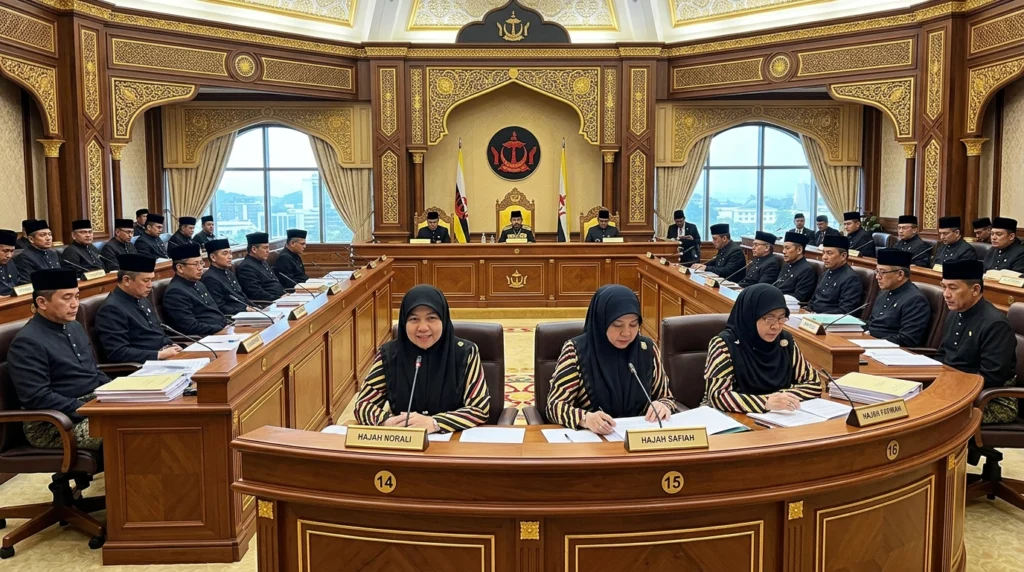
Cambodia’s drop from 20.8 percent in the National Assembly in 2023 to 13.6 percent by 2026 shows that even modest gains can reverse when party nomination practices and family succession tighten. Malaysia’s 13.6 percent in the Dewan Rakyat has become a recurring talking point for its own women MPs.
Culture, clans, political families keep numbers low
In the Philippines, Indonesia, Thailand and Cambodia, family name is often the ticket. Women who reach high office frequently do so as widows, daughters or sisters of male power-holders: Corazon Aquino and Gloria Macapagal Arroyo; Megawati Sukarnoputri and Puan Maharani; Yingluck and Paetongtarn Shinawatra; Sara Duterte.
The same pattern produces male heirs – Marcos Jr., Hun Manet, Gibran Rakabuming Raka, Prabowo Subianto (Suharto’s former son-in-law). Dynasties can raise a handful of women into visible posts while crowding out non-family women who lack land, cash and machine networks. Philippine attempts to legislate an anti-dynasty rule have repeatedly stalled in a Congress that itself is dominated by clans.
Conglomerates and hierarchical overlays
In several member states the same families that run parties also control media, infrastructure, agribusiness or extractives. Political office protects commercial position, commercial position funds the next election. That closed loop favors insiders of either sex and is hostile to outsiders of both.
Conservative interpretations of Islam shape candidate selection in Brunei, parts of Malaysia and Indonesia, and the southern Philippines. Thailand’s royalist-military establishment has repeatedly constrained parties associated with the Shinawatra family even when those parties won elections.
Confucian-inflected party-state selection in Vietnam and PAP-managed slates in Singapore can produce relatively high legislative percentages without producing independent female participation. Pre-colonial Philippine babaylan spiritual authority is often cited as a counter-tradition, but Spanish Catholic and later American commonwealth institutions introduced different public-private elements into the mix.
The way forward
Singapore and Vietnam already sit above 30 percent, and the Philippine House is close to the world average. Timor-Leste’s 35.4 percent shows what a younger state with a quota can do. Women already own or manage more than 60 million MSMEs across ASEAN. Marcos correctly noted that capital and digital-skills gaps, not talent, are the constraint. Quotas that are actually codified, public campaign funding tied to female candidate shares, and an end to the informal ban on non-dynastic women in safe seats would move the needle faster than holding conferences.
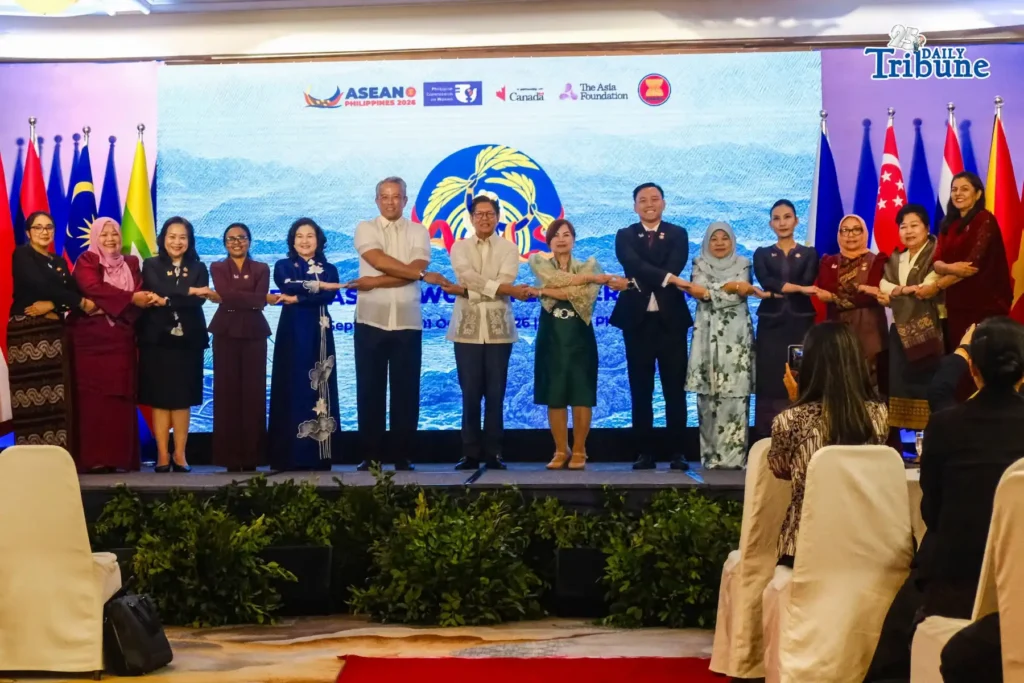
Ironically, Marcos’s call is factually grounded yet institutionally awkward. He is himself the product of the region’s most famous political-commercial dynasty, speaking from a country whose Congress remains one of the most family-saturated in Asia. The test of speech won’t be applause in Mandaluyong, it will be whether ASEAN parties – especially those in Manila – start nominating women who do not already carry a famous surname.