
The “Why Not”
As of this writing, ASEAN member states operate zero commercial nuclear power reactors. This contrasts sharply with neighbors China and Japan, both of which are ramping up production of new plants. The absence stems from historical failures driven by corruption and elite politics, heightened risk aversion after accidents, public opposition, high capital costs relative to abundant and (relatively) cheap fossil fuels, incomplete regulatory frameworks, and geological / political vulnerabilities.
Corruption and Politics in Bataan
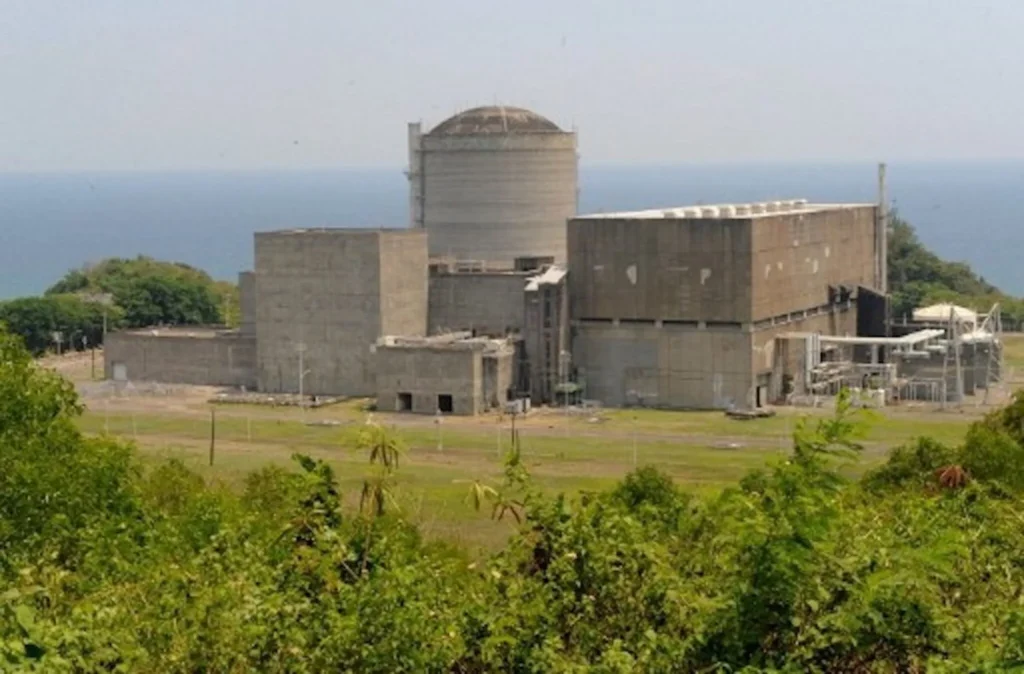
A good expample is the Philippines’ Bataan Nuclear Power Plant (BNPP), the region’s only physically completed commercial reactor. Conceived under President Ferdinand Marcos in the mid-1970s amid the oil crises, the project was awarded to Westinghouse despite a stronger competing bid. Construction of the 621 MWe reactor began in 1976; by completion in 1984 the cost had soared from roughly $500–600 million to $2.2–2.3 billion, becoming a major burden on Philippine debt.
Investigations during the first Aquino Presidency exposed systematic corruption. Marcos crony Herminio Disini received tens of millions in commissions from Westinghouse. Technical defects exceeded 4,000, and the site raised safety concerns due to nearby faults and a then-rumbling Mount Pinatubo. After the 1986 People Power Revolution, Cory mothballed the never-fueled plant.
Chernobyl provided additional political cover, but the decision also reflected anti-Marcos sentiment and public protests. Taxpayers continued servicing the loans until 2007. Subsequent revival attempts have stalled amid distrust and local opposition. Nuclear power thus became linked to authoritarian excess and patronage rather than reliable electricity.
The Fukushima Shadow
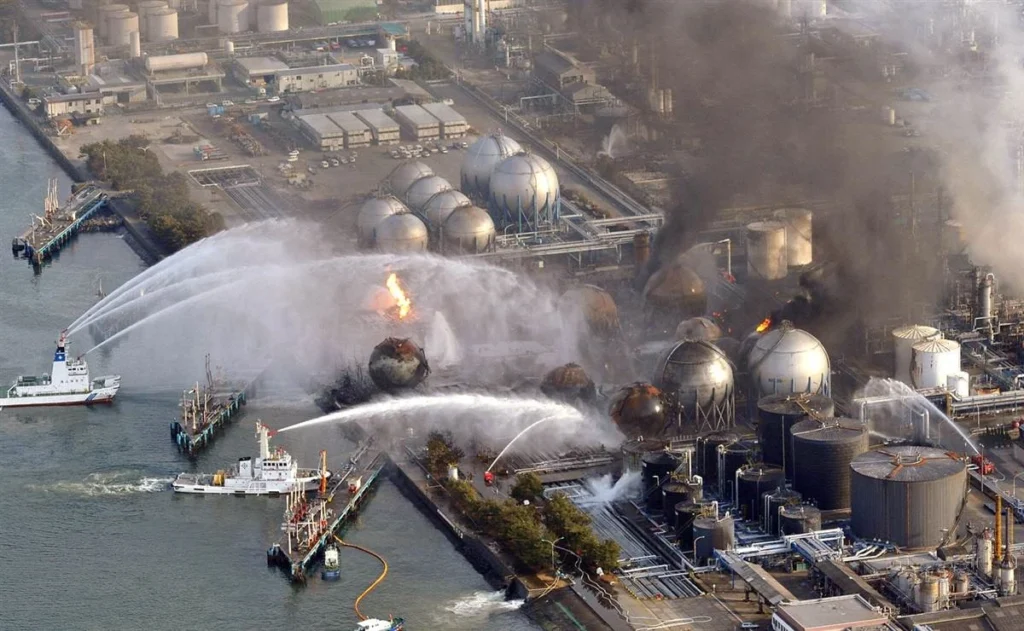
The 2011 Fukushima accident reinforced regional caution. Vietnam suspended and later canceled its Ninh Thuận projects in 2016, citing costs and safety. Thailand removed nuclear from its plans; Malaysia deferred and eventually shelved its program. Indonesia kept commercial nuclear distant despite research reactors. Fukushima amplified pre-existing preferences for lower-risk alternatives and made leaders more sensitive to public opposition in systems with short political cycles.
Electricity Mix and Vulnerabilities
ASEAN power systems remain fossil-fuel dominant, with coal supplying roughly 45–47% of generation and natural gas also significant. Hydropower is important in Laos, Vietnam, and Myanmar; solar and wind are growing but still minority shares. Systems face recurring risks, such as import dependence for coal, gas, and oil exposing countries to price spikes as seen during the Iran war. Aging plants and under-investment produce outages. Typhoons, floods, and droughts disrupt supply and political interference undermines planning. These pressures have not produced decisive nuclear adoption. High upfront costs, long lead times, and need for stable institutions clash with fiscal constraints and short-term politics.
Broader Barriers
Additional obstacles include limited domestic engineering and regulatory capacity, incomplete liability and waste frameworks, along with proliferation concerns and competition from falling renewable costs. Public opinion remains skeptical, shaped by Chernobyl, Fukushima, and Bataan. While small modular reactors are under study in several countries, none have gone past the planning phase.
China’s rapid expansion reflects centralized decision-making, state financing, and prioritization of energy security. Japan’s network rests on long institutional accumulation and carefully managed restarts. ASEAN lacks comparable continuity and insulation from factional pressures. As such, historical scandals, post-accident caution, fossil-fuel availability, and governance weaknesses continue to block deployment.
The “Always-On”, Sustainable Method of Power Generation
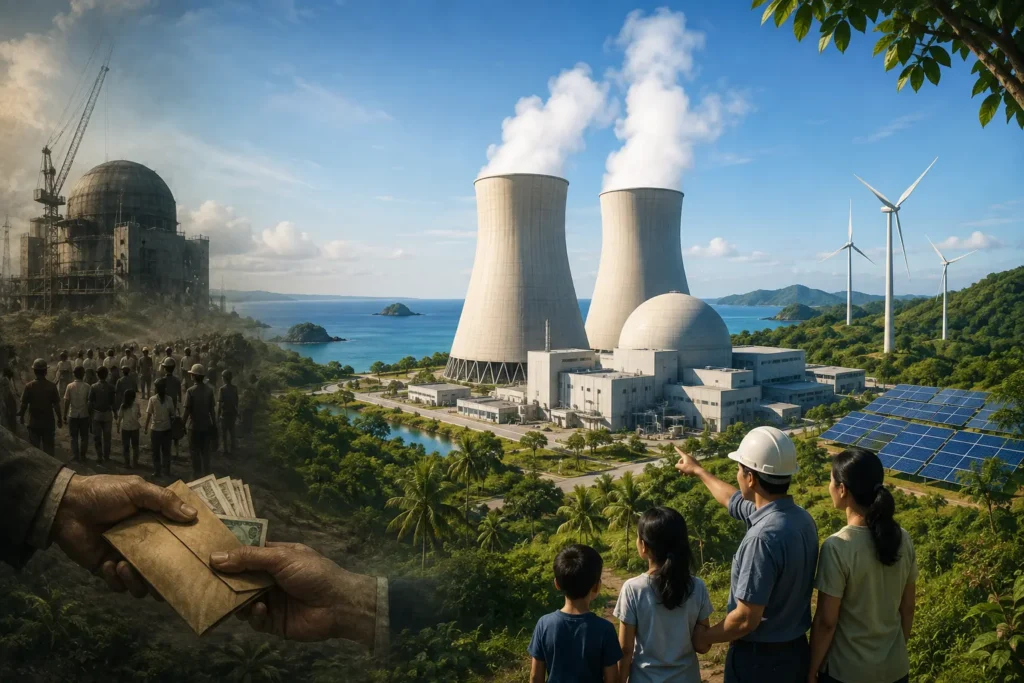
The complete absence of commercial nuclear power plants in ASEAN remains a mystery in the minds of North American and European energy researchers. The Bataan saga demonstrated how corruption and elite politics can poison a project for generations, but that was 40 years ago. Fukushima reinforced a culture of caution, but the world has since come to understand what a highly-unusual “perfect storm” set of circumstances that caused the accident. Abundant (if increasingly problematic) fossil fuels and growing renewables offer lower-friction alternatives yet come with much higher liabilities.
Systemic electricity vulnerabilities like fuel shortages, poor maintenance, storms, and politics are today more and more prescient, so one could argue it is time the institutional, financial, and political prerequisites for nuclear deployment to align themselves. Recent policy signals and SMR (Small Modular Reactor) interest suggest the region may soon cross the threshold, but as of this writing the historical pattern of aborted ambition remains unbroken.
The contrast with China and Japan underscores that nuclear power requires not only technology and capital but sustained political will in overriding the very governance weaknesses that have repeatedly derailed it in Southeast Asia.