
Jakarta/Kuala Lumpur/Singapore — Months of intense forest and peatland fires in Indonesia blanketed large parts of Southeast Asia in toxic haze, closing schools, grounding flights, and driving spikes in respiratory illness. Economists and research groups now estimate the economic toll is running into the billions of dollars, with measurable effects on the GDP of several ASEAN members and a clear warning that the costs will recur without stronger prevention systems.
The fires, concentrated on Sumatra and Kalimantan (Borneo) were worsened by a strong El Niño, burning hundreds of thousands of hectares. Official Indonesian figures put burned area at around 200,000 hectares by July. Independent monitors place the figure substantially higher. The resulting smoke triggered ASEAN’s highest haze alert for the southern region and produced hazardous air quality readings in multiple countries.
Indonesia bears the largest absolute losses
As the source country, Indonesia is suffering under the heaviest direct costs. The Center of Economic and Law Studies (CELIOS) estimated economic and health losses from January to August 2026 at Rp39.29–123.1 trillion (roughly US$2.3–7.3 billion). The upper figure equals about 49% of Central Kalimantan’s projected regional GDP and around 0.23% of national GDP from physical asset damage and disrupted activity alone. Agriculture was the hardest-hit sector in some assessments, with additional losses in trade, accommodation, and local tax revenue.
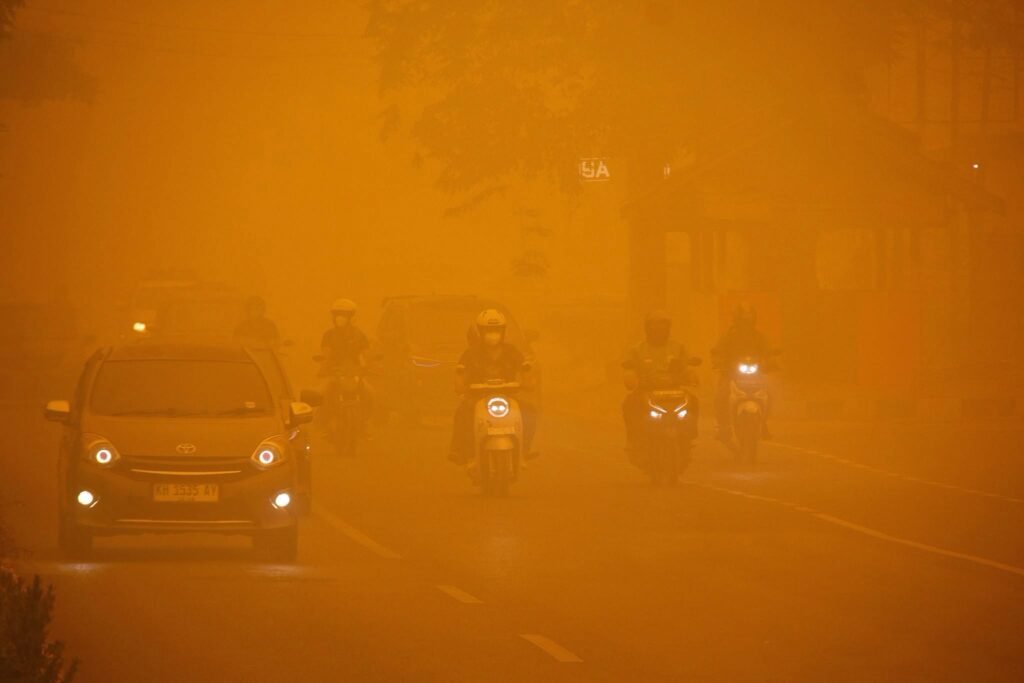
A separate macroeconomist estimate put mid-October losses near Rp167 trillion (~0.65% of GDP) and warned the full-season total could reach Rp204 trillion (~0.79% of GDP) if the pattern matches severe years such as 2015 or 2019. For comparison, the World Bank previously calculated the 2015 fires at about US$16 billion, or roughly 2% of Indonesia’s GDP at the time.
Singapore: Potentially the costliest episode on record
Singapore is facing what economists project could be its most expensive haze episode yet. Preliminary calculations based on work by NTU economist Euston Quah put this year’s cost at S$3.2–3.9 billion (US$2.5–3.1 billion) – up to double the S$1.83 billion recorded in 2015. Drivers include lost productivity (an economy that has grown since 2015), higher medical costs, reduced tourism, and more time spent outdoors by a larger population. While some analysts note that contact-sensitive sectors form only a modest share of Singapore’s GDP and that the overall drag may remain limited if the episode is short, prolonged haze would pressure retail, hotels, food and beverage, and aviation.
Daily losses in Malaysia compounding monthly GDP hits
In Malaysia, Sunway University economist Yeah Kim Leng estimated daily costs of RM20–50 million from disrupted activity, healthcare, and productivity losses, with the broader toll potentially reaching RM600 million to RM1.5 billion (US$370 Million) per month. Tourism and aviation are particularly exposed. Air pollution can cut arrivals by up to 8%, with associated GDP losses cited up to RM1.5 billion in severe scenarios.
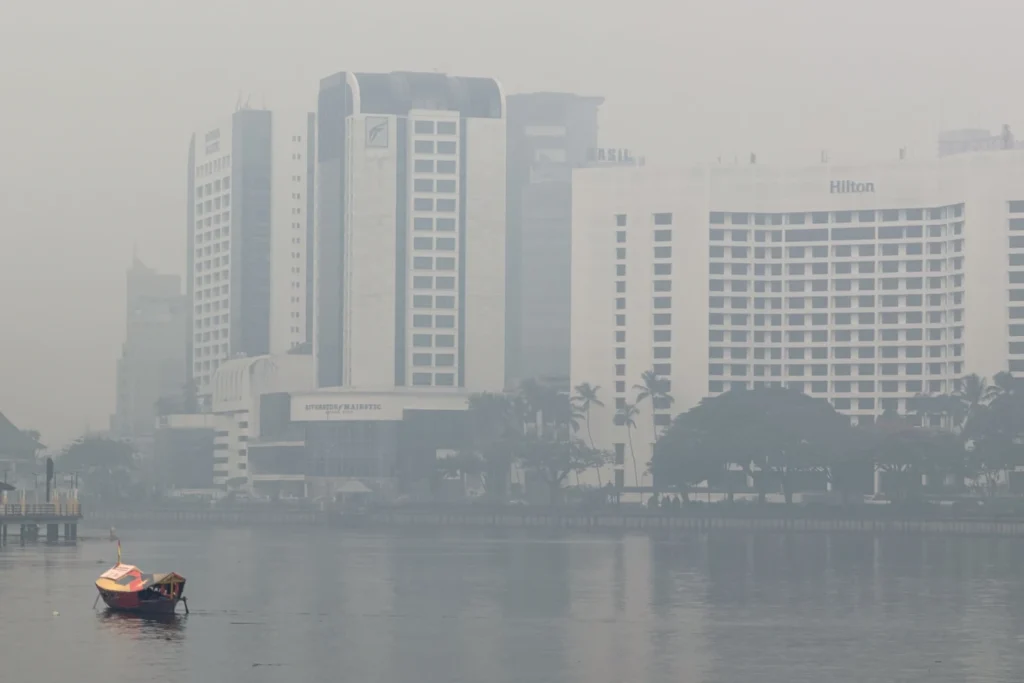
Agriculture has also suffered, with reports of reduced vegetable production and halved fruit yields in places such as Johor, with palm oil facing lagged effects. Another estimate from MARC Ratings suggested up to RM1 billion in monthly GDP impact from curtailed outdoor activity and weaker consumer sentiment. School closures affecting roughly two million students have added further productivity and care burdens. Impacts have also been reported in parts of the Philippines and Timor-Leste (including school closures), though quantified national GDP figures for those countries remain more limited in public assessments so far.
Why it keeps happening
The 2002 ASEAN Agreement on Transboundary Haze Pollution (AATHP) and subsequent roadmaps provide a framework for monitoring, information sharing, and assistance. A Second Haze-Free Roadmap (2023–2030) aims for a significant reduction in episodes and better peatland management by 2030. Yet the agreement has long been constrained by ASEAN’s non-interference principle, uneven enforcement of domestic zero-burning rules, incomplete operationalization of the ASEAN Coordinating Centre, and limited accountability for companies linked to fires. Singapore’s Transboundary Haze Pollution Act has been used to issue notices to Indonesian firms, but prosecutions remain rare across the region. Peatland drainage for plantations continues to create fire-prone conditions that are expensive to reverse once ignited.
Systems that could reduce future fires
Experts and regional proposals point to a package of measures that shift spending from repeated response to prevention:
- Peatland restoration and hydrological management: Restoring degraded peatlands is one of the highest-return interventions. Studies of past fire years suggest the avoided economic losses from restoring millions of hectares can outweigh restoration costs over multiple seasons.
- Stronger enforcement and corporate accountability: Consistent domestic penalties for illegal burning, expanded use of tools like Singapore’s haze law, supply-chain due diligence for companies (including those based in Malaysia or Singapore with Indonesian concessions), and public naming of responsible parties.
- Real-time monitoring and data sharing: Integration of satellite hotspots, ground sensors, and meteorological data with clearer regional early-warning protocols and mandatory reporting under the AATHP.
- Funding and alternatives for small farmers: A Sustainable Haze Fund (already proposed by Malaysia) and support for non-burning land-clearing methods, so that livelihood pressures do not default to fire.
- Operational ASEAN mechanisms: Full activation of the Coordinating Centre, clearer rules for rapid cross-border assistance, and results-based targets tied to the 2023–2030 roadmap rather than repeated diplomatic statements.
- Alignment with climate and health agendas: Treating haze as both an air-quality and emissions problem, with links to national climate commitments and WHO air-quality standards.
Having the will to take action
Prevention is repeatedly described as cheaper than the cumulative health, tourism, agricultural, and productivity losses that hit every few years. With the current episode already among the most intense in more than a decade and El Niño conditions still a factor, ASEAN finance and environment ministers face pressure at the November summit in Manila to move beyond existing agreements toward enforceable, financed systems. Without that shift, the economic arithmetic of recurring haze is likely to remain unfavorable for the region’s GDP.