
High Prevalence
Philippines
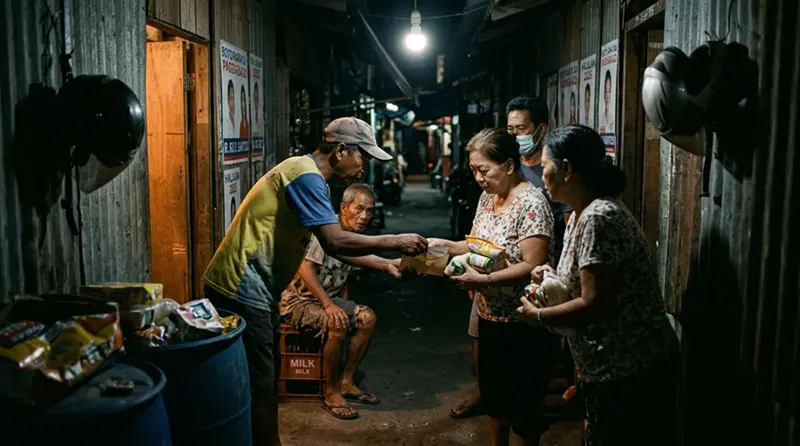
Observers still call it rampant and institutionalized. ANFREL’s (Asian Network For Free Elections) 2025 midterm mission reported cash and goods as routine, often ₱500–₱5,000 per voter and sometimes much more per household, plus welfare programs timed to polls and digital transfers that are harder to trace. COMELEC’s anti–vote-buying unit took thousands of complaints in that cycle; stakeholders told observers many voters now expect a payment. Dynastic machines and precinct-level brokers make it scalable.
Indonesia
Academic work in 2014 already estimated roughly 25–33% of voters exposed to vote-buying in legislative races (lower in the presidential race). Local races (pilkada) are worse. A 2026 UGM/KITLV study of the 2024 cycle estimated vote-buying spent about Rp 12.9 trillion nationwide and that winning district-head tickets averaged about Rp 36.8 billion – far above the salary of the office, which then feeds the incentive to recoup costs. Bawaslu (General Election Supervisory Agency) logs large numbers of politik uang complaints every cycle. Enforcement rarely keeps up.
Thailand
It is a standing feature of rural and local races and still showed up before the 2026 general election. Surveys of expected per-person outlays, unusual bulk cash withdrawals in 100- and 500-baht notes, and ECT officials acknowledging ongoing reports were recorded. Smaller constituencies are described as hotter. Complaints are many, convictions are few. Party variation exists – some machines buy, some brand themselves as not buying – but the practice is not a fringe tactic.
Lower Reported Cash-For-Ballot, More Patronage
Malaysia
Nationwide surveys usually show much lower individual cash offers than PH/ID. The bigger pattern is club goods and state patronage (projects, handouts, party machinery), especially in Sabah and Sarawak, where individualized buying is more visible than on the peninsula but still less “everyone gets an envelope” than the Philippines. Social stigma is weaker than the official line suggests.
Cambodia
Competitive national choice is tightly constrained. Vote-buying shows up as targeted cash, phones, motorbikes, and jobs aimed at commune councilors and opposition networks (HRW documented offers up to about $3,000 around the 2024 Senate vote), plus intimidation. That is buying the electors of an indirect election as much as mass street buying.
Where it Doesn’t Apply
Singapore
Classic cash vote-buying is rare. Tight rules, small geography, and a strong state make envelope politics a losing and dangerous strategy. Complaints about elections there are usually about incumbency advantage and campaign rules, not bags of cash.
Vietnam and Laos
There is no open multi-party contest for power. Influence runs through the party-state, not a retail vote market.
Brunei
No competitive legislative elections of the PH/ID/TH type.
Myanmar
The last relatively open cycle (2020) had irregularities; the junta’s staged 2025–26 process was not a free election. Pressure on voters is coercion and aid-withholding more than a classic two-sided vote market.
The How’s and Why’s
- Offer rate ≠ purchase of the result.People take money from several sides and still vote as they like. Brokers know this; they buy turnout and local networks, not a guaranteed conscience.
- Local elections are dirtierthan presidential races almost everywhere this is studied.
- Poverty + weak parties + first-past-the-post / small districtsmake buying cheaper and more rational.
- Laws exist in PH, ID, and THbut monitoring, detection and punishment lag the industry.
What the Ancient Greeks Thought of Vote-Buying
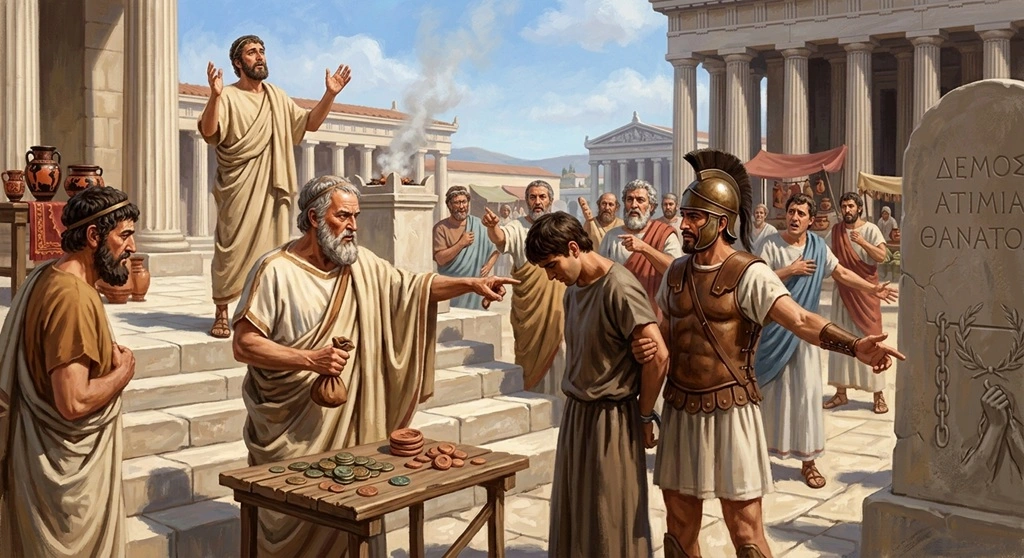
The progenitors of democracy treated vote-buying as a crime against the soul of Greek identity, regarded then as being created by the gods as the only true civilization on Earth. In Athens, the official view was blunt: buying a vote sold the demos itself. Penalties were harsh by design, often death, atimia (loss of citizen rights), property confiscation, or a severe fine. Before assemblies they even recited curses against those who took bribes.
In the ASEAN countries where voters can actually choose among parties, vote-buying is a central campaign technology in the Philippines, Indonesia, and Thailand, a secondary or regional practice in Malaysia, a tool of hegemonic control in Cambodia, and largely irrelevant as a mass cash market in Singapore, Vietnam, Laos, and Brunei. The practice continues to erode international trust in the region. Were a concerted effort put forth toward mitigation, it would potentially serve as impetus to reverse the brain drain.