
MANILA – Speaking on August 3, 2026, at the 37th U.S. Pacific Command (USPACOM) International Military Law and Operations Strategic Engagement (MILOPS) conference in Kuala Lumpur, Malaysia, “Gibo” – as he is affectionately and respectfully known to Filipinos – framed the Philippines’ defense of its maritime entitlements under the United Nations Convention on the Law of the Sea (UNCLOS) and the 2016 arbitral award as a collective ASEAN imperative rather than a purely bilateral dispute.
“There can be no zone of neutrality in ASEAN because there is really one force, China, that is dividing us,” he said in remarks after the conference. He emphasized that the Philippines, as both a Southeast Asian and Pacific island nation, serves as ASEAN’s practical gateway to the Pacific Ocean. Supporting Philippine rights under UNCLOS and the arbitral ruling, which invalidated China’s expansive nine-dash line claims, would secure unimpeded regional access and reinforce a rules-based order benefiting the entire bloc.
Warning on CCP Influence
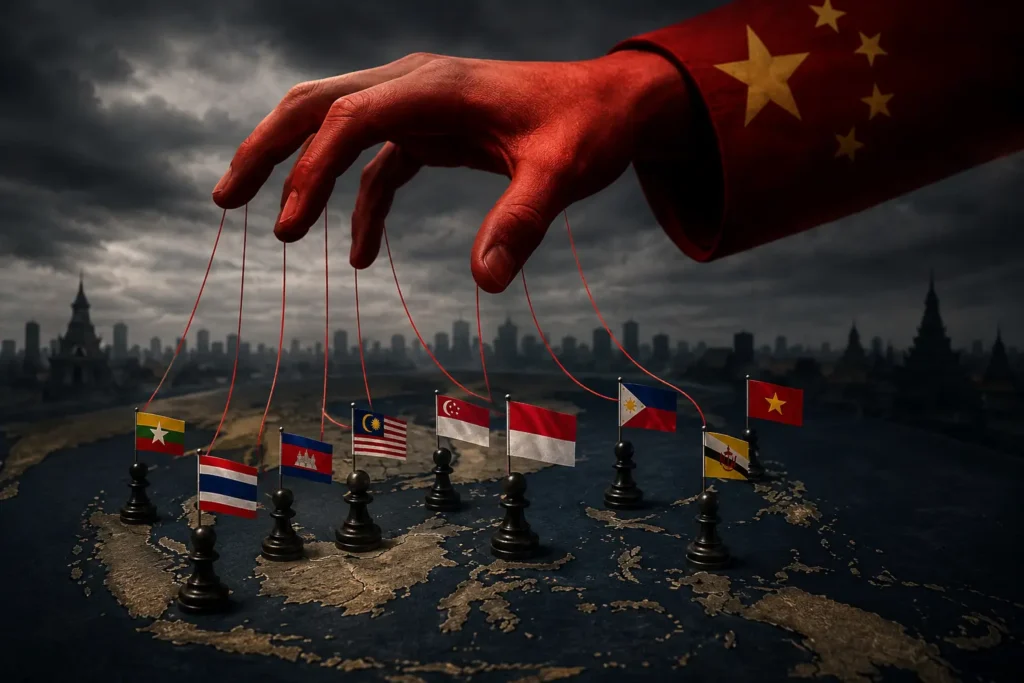
“If ASEAN wants unimpeded access to the Pacific under a regime of UNCLOS and our trust and confidence, it follows that ensuring Philippine entitlements as a whole under UNCLOS and the Arbitral Award is in ASEAN’s interest,” Teodoro stated in his keynote. “We have committed to the rule of international law. Maritime law is not only for the benefit of the Philippines. The Philippines also has the responsibility to steward these rights for Filipinos, ASEAN and the rest of the world.” He described such support as a potential “seminal event” defining ASEAN solidarity and its role as a premier advocate of international law.
His comments come amid longstanding concerns that Chinese economic engagement and inducements have complicated ASEAN’s consensus-based decision-making, particularly on South China Sea issues. Analysts such as SeaLight’s Raymond Powell and others have noted Beijing’s use of investment, infrastructure financing, and other monetary incentives to lock in closer ties with individual member states, arguably at the expense of unified positions critical of Chinese assertiveness. Teodoro’s latest intervention builds on earlier warnings, including a 2025 call for ASEAN unity to “resist coercion in whatever form” and exchange information on foreign activities harmful to national interests.
A Decade After the UNCLOS Ruling
The defense chief stressed that the 2016 arbitral award, marking its 10th anniversary, established principles that extend beyond Philippine interests and should unite rather than divide ASEAN. He pointed to past instances in which other ASEAN members, such as Malaysia and Singapore, resolved territorial and maritime disputes through independent tribunals and accepted the outcomes, consistent with the bloc’s preference for peaceful, legal approaches.
“Because it benefits the Philippines, who else does it benefit? It benefits ASEAN,” Teodoro said. “The Philippines is doing ASEAN a service by standing up for the rule of international law in the most direct and concrete manner.” He added that future cooperation should focus on shared values such as freedom of navigation rather than differences, with operations grounded firmly in law.
Promoting the SCS Code of Conduct
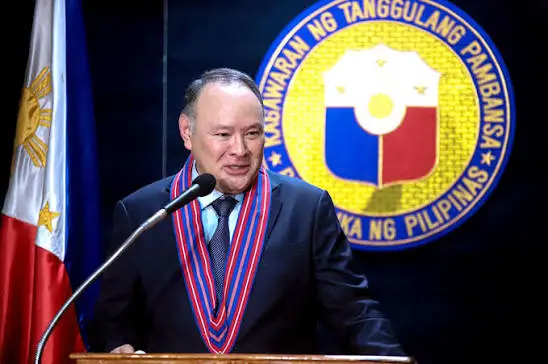
The remarks reflect Manila’s broader strategy under President Ferdinand Marcos Jr. of publicly challenging Chinese maritime pressure while deepening security partnerships with the United States, Japan, Australia, and others. China rejected the 2016 ruling and has sanctioned Teodoro and his family over what Beijing describes as “erroneous remarks,” barring them from entering the mainland, Hong Kong, and Macau. Gibo has remained defiant, repeatedly citing a “deficit of trust” based on China’s actions versus its words.
ASEAN’s traditional preference for non-alignment and consensus has long complicated a unified response to South China Sea tensions. Teodoro’s message – that siding too closely with or remaining passive toward Chinese pressure (especially through economic activities) risks fragmenting the bloc and weakening its security – underscores Manila’s push for the association to prioritize international law and collective resilience. Whether other members will heed the call remains to be seen as negotiations on the proposed South China Sea Code of Conduct continue.