
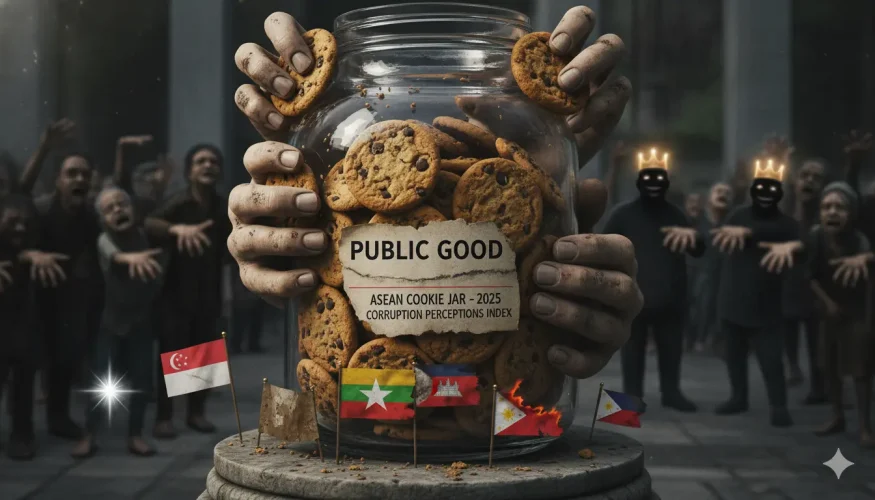
Corruption remains a significant challenge across much of ASEAN, as reflected in the 2025 Corruption Perceptions Index (CPI – published annually by Transparency International), where Singapore ranks highly clean while countries like Myanmar, Cambodia, and the Philippines score poorly. The crux is paying public officials living wages to alleviate dependence on handouts from elites and politicians engaging in theft of government money or natural resources, which would be the death knell of their godlike statuses.
Robert T. Wagner
Clark Field, Pampanga
May 29th, 2026
The Tallest of Tasks
First off, it should be strongly expressed that defeating corruption in this region has everything to do with manifesting the will from within to hold elites accountable and absolutely nothing to do with – as many in the upper echelons of Southeast Asian society continue to lament – former Western colonial powers creating systems that remain “impossible” to break in the modern era.
Extra-territorial examples such as Mexico, a modern, vibrant democracy plagued by drug cartels that control large swaths of the country, or Belarus with its years-long brutal dictatorship running roughshod over an oppressed citizenry, show how difficult it is – even in more economically advanced nations – to overcome elite impunity.
Below is a brief rundown of anti-graft efforts within ASEAN:
Malaysia
- Military Procurement Scandal (2025–2026): Investigations into alleged bribery and graft in army procurement contracts (2023–2025), involving dozens of projects. Former Army Chief Muhammad Hafizuddeain Jantan (and wife) faced money laundering charges; former Armed Forces Chief Mohd Nizam Jaafar faced abuse of power, breach of trust, and illegal gifts. Raids seized cash, gold, luxury watches, and assets. The scandal prompted procurement freezes and royal criticism.
- Ongoing references to the long-running 1MDB scandal, with former PM Najib Razak receiving additional sentences in related trials.
Philippines
- Flood Control Projects Scandal (2024–2026): Massive irregularities in billions of pesos allocated for flood mitigation. Allegations include “ghost” projects, substandard work, contractor monopolies (i.e., Discaya and Co families), and kickbacks (reportedly up to 70% of funds lost, equating to hundreds of millions to more than a billion USD). Implicated parties include DPWH officials, engineers, lawmakers – such as Senator Jinggoy Estrada charged with plunder over ₱573M kickbacks – contractors and staff members. Sparked protests, Senate inquiries, asset freezes, and suspensions.
Indonesia
- Chief Ombudsman Bribery Arrest (April 2026): Hery Susanto, sworn in as chief ombudsman, arrested just days later for allegedly accepting bribes from a nickel mining and processing company.
- Former Trade Minister Tom Lembongconvicted in July 2025 of corruption related to sugar imports (4-year sentence), amid claims of selective prosecutions.
- Ongoing KPK (anti-corruption commission) actions against officials and judges in palm oil and other cases.
Vietnam
- “Blazing Furnace” Anti-Corruption Campaign(ongoing, intensified 2022–2026): Dozens of high-level officials, including two presidents (in 2024), deputy prime ministers, ministers, and military officers, removed or prosecuted for bribery, abuse of power, and embezzlement. Notable cases include COVID-19 test kit overpricing, repatriation flights, and major infrastructure/banking scandals (e.g., involving tycoons like Truong My Lan, with officials implicated). Thousands of party members disciplined.
- Arrests tied to Ho Chi Minh City airport constructionand other graft cases.
Thailand
- Various cases involving local officials, police, and procurement. National Anti-Corruption Commission (NACC)handled numerous probes (2022–2024), including against mayors in Phuket and others for embezzlement and bid rigging.
- Historical high-profile cases continue to echo, with ongoing scrutiny of officials in public projects.
Elsewhere
- Cambodia and Myanmar: Frequently rank among the region’s most corrupt on indices, with reports of systemic issues tied to elite networks, but fewer transparent, high-profile prosecutions of senior officials in recent public records.
- Singapore, Brunei, Laos: Generally, a low number of prominent cases reported. Singapore and Brunei (the sole absolute monarchy in the bloc) promulgate strong anti-corruption enforcement, whereas totalitarian Laos releases very little data on corruption-related matters.
These cases mostly involve government procurement, infrastructure funding, and bribery of officials. Enforcement levels vary. Some countries like Vietnam and Malaysia show active prosecution campaigns, while others – such as the Philippines – face criticism for selectivity or limited progress.
Filipinos (who are not Asians), Malays (including Brunei), Khmers (Thailand, Cambodia), Javanese (Indonesia), Laotians (their own distinct ethnic group) and Viets all have the advantage of being relatively new sovereign entities and preside over young, well-educated populations, so hope is high that solid, non-elite leaders might soon appear.
All of them have the prototypal example of Singapore – the smallest yet economically most powerful ASEAN member – that can be held up and followed in the future by those with enough desire to mitigate corruption, the only thing holding the region back. Paying public servants a living wage is the way. Again, it is a simple matter of internal will.
As an ordinary taxpayer, articles like this are both frustrating and important. We work hard, pay our taxes, and expect public funds to be used for services that improve our lives—not to line someone’s pockets. Corruption may seem like an abstract issue, but its effects are felt every day through poor infrastructure, inadequate public services, and missed opportunities. This is a sobering reminder that accountability in government isn’t just a political issue—it’s something that affects every Filipino.