
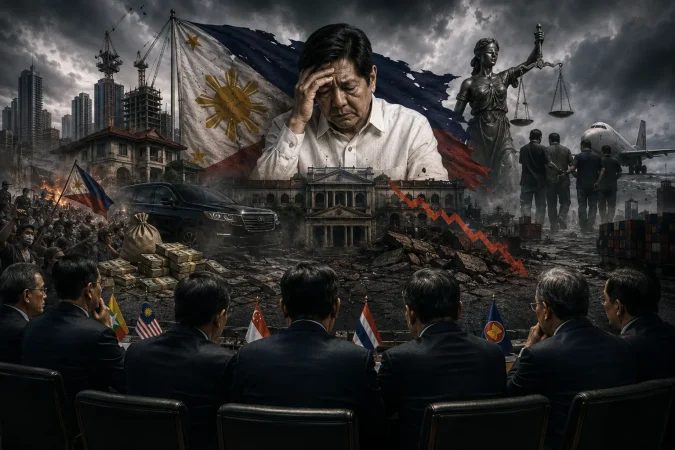
As the Philippines assumes the rotating chairmanship of ASEAN in 2026 under the theme “Navigating Our Future, Together,” many member states are privately questioning whether it can steer the ship amid its own storms. A litany of unhappy events, such as political upheavals, cringeworthy corruption exposes’, and the high-profile incarceration of a former President by the ICC, have drawn a mix of discreet worry, principled commentary, and suppressed ridicule from neighbors who prioritize stability and strategic progress.
Duterte’s arrest in March of last year upon returning from Hong Kong, followed by a hasty transfer to The Hague on charges of crimes against humanity related to his drug war’s thousands of deaths, marked a seismic event. It deepened the rift between the Marcos and Duterte clans and fueled domestic protests. For ASEAN, long guided by a policy of avoidance of involvement in other members’ affairs, the episode tested regional norms.
Indonesia: A Call to Break Impunity
Indonesian voices have been among the most outspoken in framing the Duterte arrest as a potential regional milestone. Yuyun Wahyuningrum, executive director of ASEAN Parliamentarians for Human Rights and an Indonesian expert, described it in The Jakarta Post as “a watershed moment” and “the beginning of a new era in which no leader… can evade accountability.” She urged ASEAN to move beyond non-interference toward greater cooperation on human rights and the rule of law.
Mercy Chriesty Barends, an Indonesian MP and APHR chair, echoed with, “This arrest marks a decisive step in the fight against impunity. No individual, regardless of power or position, is above the law.” Such statements reflect Jakarta’s growing emphasis on democratic norms and accountability, even as official Indonesian government reactions remained measured.
Malaysia: Sovereignty must be Upheld
Former Malaysian Prime Minister Mahathir Mohamad criticized Manila for not bringing its own judicial environment to bear and allowing the ICC to take control of Duterte’s case.
Academics like Azmi Hassan viewed the arrest through a domestic political lens. “Manila could have ignored the ICC warrant (but didn’t) because of Marcos Jr’s political interests.” This reflects broader Southeast Asian skepticism toward external justice mechanisms perceived as selective.
Singapore: Pragmatists
Lion City-based diplomacy expert Oh Ei Sun of the Singapore Institute of International Affairs attributed recent events to “Philippines’ domestic political tussles” between the president and vice president, viewing ICC warrants as tools in power struggles rather than pure justice.
Singaporean commentary often emphasizes economic and stability concerns over human rights lectures, viewing Philippine volatility as a drag on regional investor confidence. Its commentary on recent corruption schemes that resulted in over one billion US Dollars of government funds disappearing into “the usual suspects’ pockets” was particularly harsh.
Broader ASEAN Caution
ASEAN as a bloc has stayed largely silent on Duterte’s fate and Philippine internal politics, consistent with its “ASEAN Way.” The Diplomat noted that the organization is “likely to remain passive,” with traditional blinders on shielding members from scrutiny. Events like the afore and Bato Dela Rosa’s recent hijinks in the Senate “disrupt this norm,” but collective response remains muted.
Viewing simultaneous, multiple black marks such as POGO’s, scam centers, and DPWH corruption scandals, regional members express quiet concern about the Philippines’ ability to lead effectively in 2026. As ASEAN chair, Manila now faces unprecedented scrutiny while coordinating responses to global shocks like energy crises from the Middle East conflict.
Economic Underperformance Raises Eyebrows
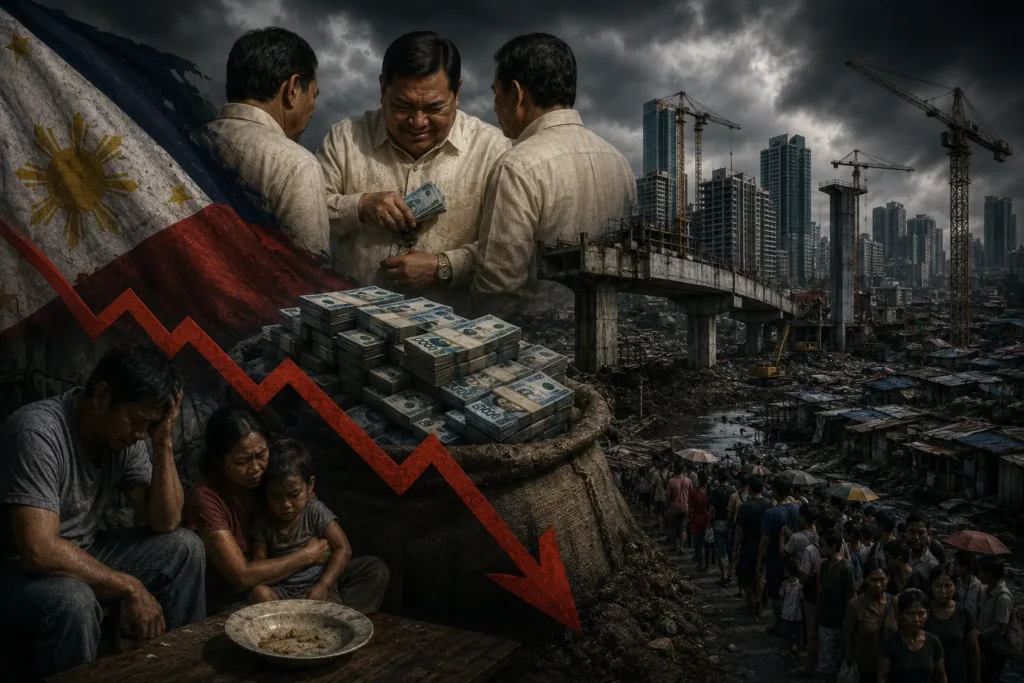
The Philippines’ economic woes compound these perceptions. Once hailed as a bright spot within the zone, growth has slowed sharply. The IMF delivered one of the steepest downgrades for 2026 among ASEAN peers in memory. ANZ Research flagged it as a regional “laggard,” citing sluggish infrastructure spending – potentially due to elite thievery – including a major case involving typhoon defense funds. Third-quarter 2025 GDP hit a four-year low, prompting slashed targets.
OCBC Bank’s Lavanya Venkateswaran described the country as starting its chairmanship on “unsure footing.” Neighbors like Vietnam, Indonesia, and Malaysia – all showing strong growth – are seen as more resilient, even amid shared regional headwinds. Philippine political chaos and government abuses risk deterring foreign investment and undermining Manila’s credibility in pushing ASEAN economic integration.
Lawlessness and dynastic politics add to the unease. Regional observers note how major political clan rivalries, exemplified by the Marcos-Duterte feud and respective allies being forced to choose sides, have overshadowed governance, with feeble corruption probes eroding public trust and generating civil unrest.
Watching, Warily
ASEAN partners express sympathy for Philippine victims of past violence and hope for justice in holding corruption culprits liable, but prioritize their own interests of economic resilience, South China Sea dynamics, and regional cohesion. Indonesian human rights advocates see opportunity in the Duterte precedent, Malaysian realists decry prosecution ineptitude, and Singaporean pragmatists focus on fallout.
As one bloc diplomat (speaking anonymously) put it, “The Philippines has talent and potential, but right now it looks weak and erratic. For the chair to succeed, Manila must show it can manage its own house first before guiding the region.”
Whether the Presidency of Bongbong Marcos is able to produce genuine accountability or merely become another chapter in dynastic island intrigue remains debatable. For now, ASEAN neighbors are watching closely – hoping the Philippines stabilizes but hedging against further turbulence that could ripple across the bloc.