
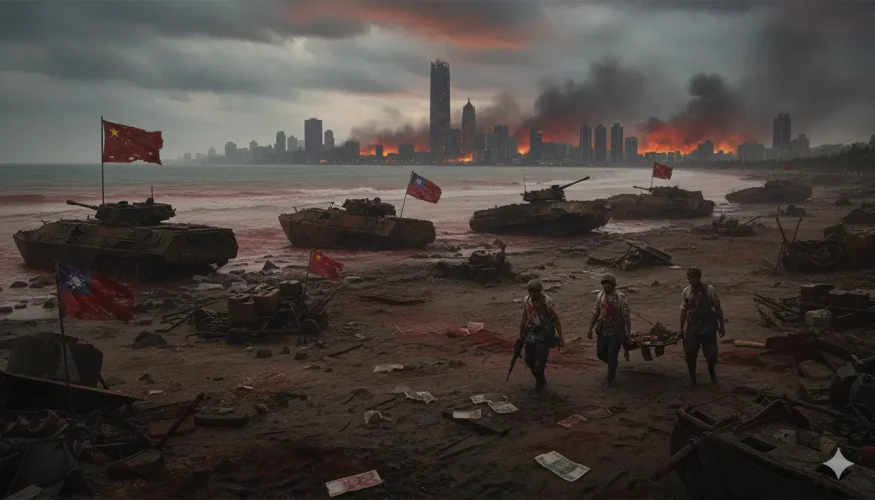
Civilians as a Last Line of Defense
Taiwan’s defense strategy has evolved to emphasize “asymmetric warfare,” often dubbed the “porcupine” approach, where low-cost, high-impact weapons like anti-ship missiles, drones, and sea mines make an amphibious assault prohibitively expensive for China. But beyond formal military defenses, experts highlight the role of civilian resistance in turning the island into an “unconquerable fortress.”
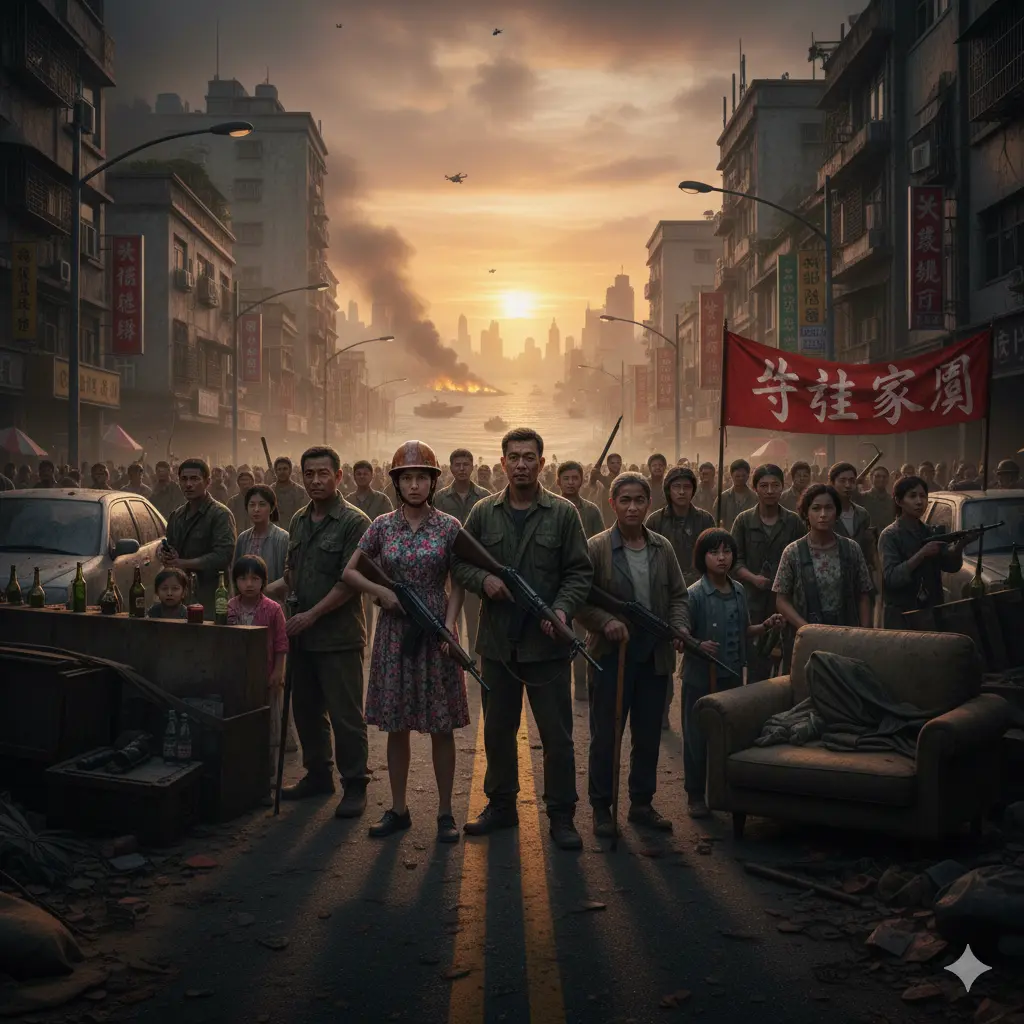
In an interview with TaiwanPlus, Wu Wen-Chin, a research fellow at Academia Sinica’s Institute of Political Science, emphasized how Taiwan’s rugged terrain (mountains covering two-thirds of the island) and dense urban centers like Taipei would favor defenders in prolonged guerrilla operations. “The PLA might land, but holding territory would be a nightmare,” Wu said. “Civilians trained in urban warfare would harass supply lines, using everything from homemade drones to improvised explosives tossed out of apartment widows onto soldier’s heads and vehicles.”
Christina Chen, an assistant research fellow at the Institute for National Defense and Security Research (INDSR), echoed this in the same discussion, noting that recent civil defense drills simulate hybrid threats, including cyberattacks and disinformation, to prepare the populace for resistance. “We’re not just training soldiers; we’re building societal resilience,” Chen explained. These drills, rolled out nationwide in 2025, include first aid, evacuation, and basic combat skills, inspired by Ukraine’s civilian mobilization against Russia.
Public sentiment supports this readiness. A 2020 poll by the Taipei Times found over 77% of Taiwanese willing to fight in the event of invasion. Puma Shen, a prominent advocate for civilian defense and disinformation countermeasures, told Foreign Policy that grassroots training could see “hundreds of thousands” resisting occupation, drawing on historical precedents like WWII Japanese bunkers on the island. If China were to deploy 1.5 million soldiers on the ground, they would face the wrath of 17 million Taiwanese adults, ergo a ratio of 15+ to one.
Some skepticism exists among young Taiwanese. A DCard poll of college students showed only 22% of males and 5% of females willing to fight, based on the fervent belief that an invasion would never happen. Ben, a Taipei finance professional interviewed by the BBC, reflected this divide: “We need these drills, but invasion chances are low.” An INDSR survey in May 2025 revealed 65% believe conflict is unlikely within five years. It was noted that most changed their attitude if an invasion were to actually occur.
In this attrition model, Chinese troops, lacking recent combat experience or competent leadership, would face ambushes in urban chokepoints, supply disruptions from civilian saboteurs, and morale-sapping guerrilla tactics. A RAND Corporation analysis suggests such resistance would damage public support for the war on both sides, with heavy casualties undermining invaders’ will.
Estimating the Toll
Wargames provide sobering estimates. A January 2026 report from the German Marshall Fund (GMF) simulated two scenarios: a minor conflict ending in de-escalation and a major war involving U.S. and Japanese forces. In the latter, China withdraws after months of fighting, suffering hundreds of thousands of PLA casualties (killed, wounded, or captured), losing at least half of its ground forces.
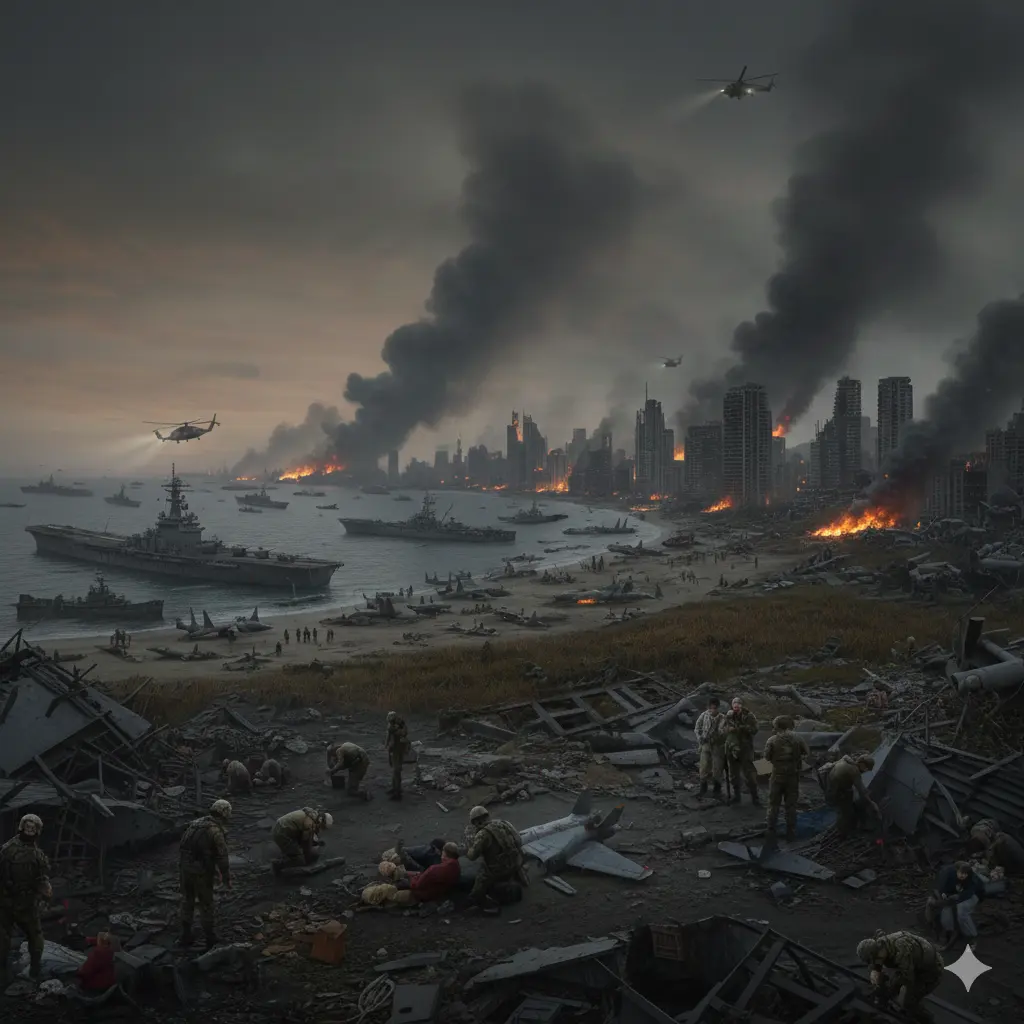
Taiwan would endure 50,000 military and 50,000 civilian deaths, its economy devastated. The U.S. could lose 5,000 troops and 1,000 civilians, with Japan facing 1,000 military and 500 civilian losses. A CSIS wargame from 2023, run 24 times, similarly projected U.S. losses of dozens of ships, hundreds of aircraft, and thousands of servicemembers, with exponentially higher rates of devastation on the Chinese side.
Economic fallout would be catastrophic. The GMF estimates $2-10 trillion in costs for China, including sanctions, supply chain disruptions, and social unrest. A Hague Centre for Strategic Studies report projects a 10.2% global GDP drop in an invasion year, twice the 2008 crisis impact, with semiconductor shortages rippling through critical sectors. Taiwan’s dominance in advanced chips – 60% of China’s imports – makes seizure appealing, but “kill switch” destruction of production and storage facilities before and during conflict would cripple both economies.
Perceived costs for Beijing include political instability culminating in regional revolts by unemployed / hungry Chinese that would require massive military actions to mitigate. The Stimson Center notes inevitable casualties could strain the Chinese Communist Party (CCP) amid population and economic decline, and failure would undermine Xi Jinping’s rule.
The Folly of Force over Finance
Despite these risks, Beijing views Taiwan as a “core interest” tied to national rejuvenation. Experts like those at Defense Priorities argue China might accept heavy losses for unification, seeing it as essential to CCP legitimacy. Hu Xijin, a former Global Times editor, claimed in 2024 that power shifts make invasion feasible, dismissing Taiwanese resistance.
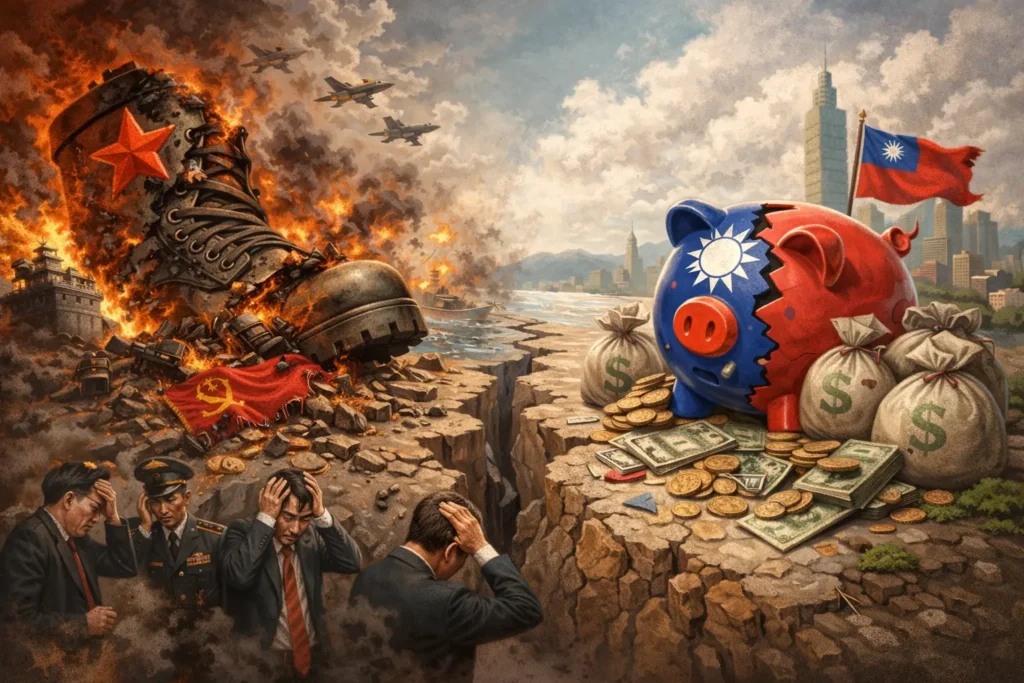
Thankfully, peaceful acquisition through financial measures (trade deals, investments) is viewed as the wiser course by the vast majority. China could leverage economic interdependence, as Taiwan imports 97% of its energy and relies on mainland markets. A Quora analysis suggests Beijing prefers non-military unification to avoid unknown disruptions. Responsible Statecraft notes three deterrents: Taiwan’s semiconductors, strait trade routes, and China’s economic vulnerabilities.
Local voices question the logic of war. Taiwanese Foreign Minister Joseph Wu, in a 2021 interview, stressed preparation while advocating deterrence: “We want to be ready for invasion.” Oriana Skylar Mastro, in a Stanford interview, argued U.S. intervention is key to prevention. William Yang of Crisis Group told the BBC that while 2027 looms as a readiness milestone, invasion isn’t inevitable.
Choosing war over finance appears shortsighted, risking pyrrhic victory. As CSIS warns, even “success” could destabilize the CCP. For Taiwan, resilience is the ultimate deterrent; for China, the costs may prove too steep.