
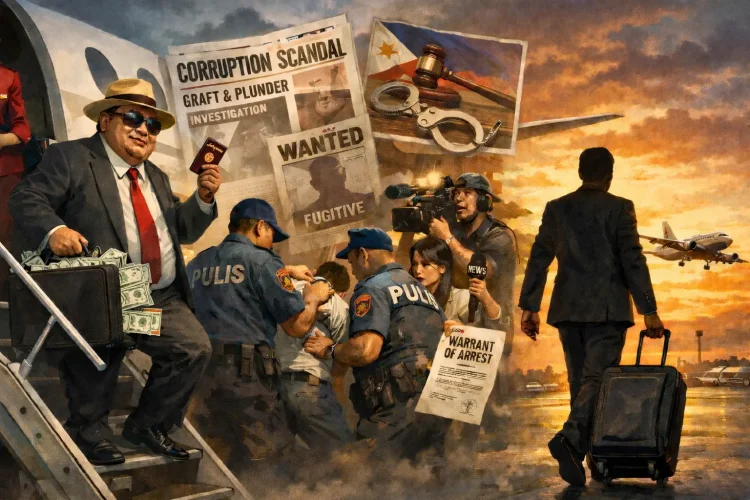
Go Go, Alice Guo! And Bring Along Zaldy Co!!
Like the title line from John Denver’s classic 60’s pop/country song, “Leavin’ On a Jet Plane”, bigwigs in the Philippines have easily avoided being thrown in the Hoosegow (referring to jail or prison, a misnomer of the Spanish “Juzgado” = court of justice) by taking advantage of the unique porousness of its borders and a weak legal system. Contributing factors are:

- Corruption in Immigration and Border Controls: The Bureau of Immigration (BI) has been repeatedly implicated in facilitating escapes through bribery and collusion. Accused individuals can bribe BI personnel to bypass hold departure orders (HDOs), use fake documents, or exit via unofficial channels like private boats or small airports.
For instance, in 2024, dismissed Bamban mayor Alice Guo, accused of ties to illegal Philippine Offshore Gaming Operators (POGOs) and being a Chinese spy, fled the country despite an active lookout bulletin. Investigations revealed she likely departed via yacht to Malaysia, exposing how corrupt officials enabled her exit.
Similar incidents include Korean fugitives escaping BI custody in 2025, where personnel were dismissed for aiding the breakout through negligence or payoffs, highlighting a “culture of corruption” within the agency. Despite reforms like dismissals of over 45 agents in 2022 for bribery, such practices persist, allowing VIPs to evade detection.
- Political Connections and Insider Information: High-profile figures often leverage networks within government, law enforcement, and the judiciary to delay arrests or receive advance warnings. Political dynasties, families that dominate elected positions, provide protection through alliances, enabling evasion. In the ongoing flood control corruption scandal involving billions in misappropriated funds, several senators and officials have faced warrants but managed initial delays or hiding due to their influence.
Historical cases like the “Napoles” pork barrel scams during the 2nd Aquino admin show how indicted politicians use family ties to avoid full accountability, with convictions being rare despite evidence. Tips from sympathetic insiders provide windows to hide domestically (in private estates or allied regions) or flee/seek asylum abroad.
- Institutional Loopholes and Weak Monitoring: Philippine laws, such as the outdated 1940 Immigration Act, lack robust tools to combat modern evasion tactics, syndicates using technology, or private transport. Borders are like Swiss cheese, with limited real-time data sharing between agencies like the Philippine National Police (PNP), BI, and the National Bureau of Investigation (NBI).
Substandard police infrastructure – many stations lack basic equipment such as computers or secure facilities – further hampers enforcement. Accused VIPs can exploit judicial delays, lengthy appeals or slow warrant issuances to disappear. In some cases, they seek refuge abroad, as seen with corrupt officials finding safe havens in places like Timor L’este, where extradition can be protracted as seen in the Arnie Teves Jr. incident.
- Vote-Buying and Public Manipulation: Politicians maintain support through the intended perpetuation of poverty so that “La Masa” (the voting masses) subsequently relies on patronage, and the distribution of funds or favors that discourages aggressive pursuit by authorities fearing backlash. Dynasties hide behind the 1987 Constitution that is woefully lacking in this area and portray themselves as victims of political witch hunts when evidence of wrongdoing is brought forward.
What It Says About Law Enforcement and Internal Security
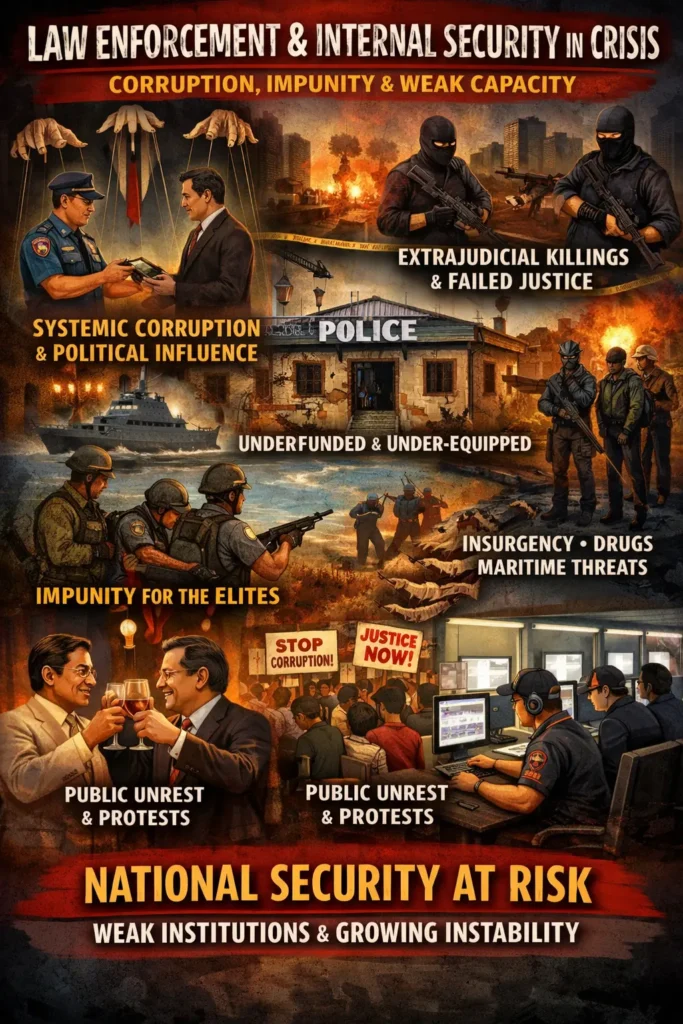
- Endemic Corruption and Lack of Independence: Corruption is not isolated, rather systemic, with law enforcement agencies like the PNP and BI often compromised by graft, leading to abuses and eroded public trust. Human rights reports note that corruption contributes to impunity, as seen in extrajudicial killings and failed prosecutions. Political dynasties exert undue influence, making institutions subservient to powerful families rather than the law, as evidenced by inconsistent reforms and rare high-level convictions.
- Resource and Capacity Shortfalls: Internal security faces challenges from underfunded, ill-equipped forces dealing with multiple threats like insurgency, drugs, and external disputes (i.e., the South China / West Philippine Sea). This diverts attention from white-collar crimes, allowing VIPs to exploit gaps. Police reform efforts are stymied by governance issues, with officers’ performance hindered by low pay and poor training.
- Broader Implications for National Security: Such failures weaken overall stability, as unchecked corruption fuels inequality, public cynicism, and potential unrest (recent protests over flood scandals). It also exposes vulnerabilities to external influences, like foreign criminals using POGOs and Scam Centers as covers, further straining resources. While leaders like President Marcos Jr. have vowed crackdowns, such as promising arrests in graft scandals, these often fall short due to the same systemic issues, perpetuating a cycle where accountability is selective and elites remain insulated.
In essence, this isn’t just about individual bad actors but a flawed democratic structure where power concentrates in dynasties, enabling evasion and highlighting the urgent need for independent institutions and anti-corruption measures. Recent scandals, like the 2025 flood control probe that saw numerous elites, such as former Congressman Zaldy Co, absconding abroad with billions in stolen government funds, show public outrage mounting, but meaningful change requires dismantling these entrenched networks and systems.