
Priced out of the Market
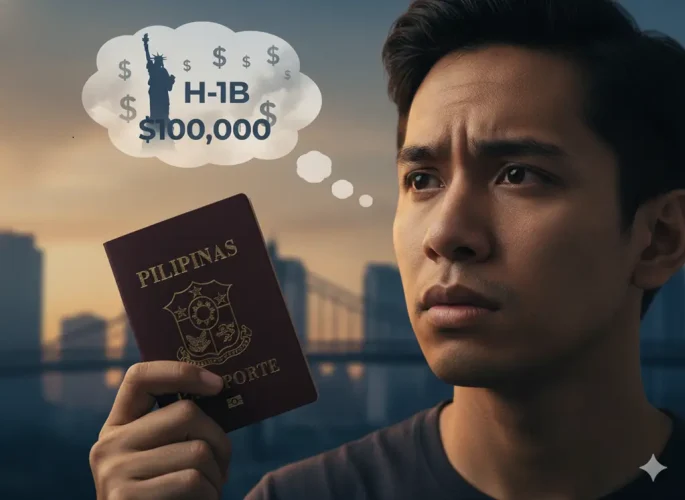
In the bustling IT hubs of Makati and Cebu City, where young coders once dreamed of Silicon Valley salaries, a new U.S. policy is casting a long shadow over the aspirations of thousands of Filipino professionals. President Donald Trump’s September 19th proclamation imposing a one-time $100,000 fee on new H-1B visa petitions has upended the pathway to American jobs for specialists in information technology (IT), medicine, engineering, and teaching.
In effect since September 21st, the measure – aimed at curbing what the White House calls “abuse” of the program by outsourcing firms – targets petitions filed for workers outside the U.S., exempting renewals and pre-existing visas but slamming the door on fresh entrants.
For the Philippines, a nation that sent over 5,000 H-1B workers to the U.S. in fiscal year 2024 alone, ranking fourth behind India, China, and Canada, the fee represents more than bureaucratic red tape. It is a seismic shift in the socio-economic landscape, alleviating domestic brain drain while stifling remittances that fuel 21% of the country’s GDP.
“This isn’t just about visas; it’s about families betting their futures on a system that’s now priced out of reach,” says Dr. Elena Santos, a Manila-based economist at the University of the Philippines. “Filipino nurses and engineers have long been the backbone of U.S. shortages, but at $100,000 a pop, employers will think twice… or not at all.”
The IT Sector: Dreams Deferred in a Global Tech Race
 The Philippines’ IT-BPM (Business Process Management) industry, valued at $35 billion annually and employing 1.5 million people, has thrived on H-1B pipelines to U.S. firms. English-fluent and cost-competitive Filipino software developers and data analysts have filled critical gaps at companies like Accenture and IBM. But the new fee could slash applications by 40%, according to a November 2025 report from the Information Technology and Business Process Association of the Philippines (IBPAP). “We’re talking about mid-level coders earning $1,500 monthly here, suddenly needing U.S. sponsors to absorb a fee equivalent to 50 years of their local salary,” notes IBPAP President Jack Madrid. “Many will pivot to Canada or Australia, where express-entry programs cost a fraction of that.”
Socio-economically, the fallout is stark. Remittances from U.S.-based IT workers totaled $2.5 billion in 2024, supporting education and housing for families back home. Delayed or denied visas mean fewer dollars flowing into Philippine households, potentially shaving 0.5% off GDP growth in 2026, per Asian Development Bank projections.
In Cebu’s thriving tech parks, home to 200,000 workers, local startups are now reporting a 15% drop in talent retention (due to increased absences) as skilled professionals reluctantly settle for domestic positions that pay 30–50% less than comparable U.S. positions. “It’s a double whammy. We lose our best minds abroad, but the ones staying behind face stagnant wages,” says 28-year-old developer Ana Reyes, who scrapped H-1B plans after her prospective employer cited the fee as a non-starter.
Medicine and Engineering: Filling U.S. Gaps, at What Cost?
 In healthcare and engineering, the impacts cut deeper, hitting rural U.S. providers hardest while draining Philippine expertise. Filipino nurses and physicians, comprising 8% of the global nursing workforce, have been vital to America’s aging population crisis. The American Medical Association forecasts an 87,000-doctor shortage by 2030, with rural hospitals like South Dakota’s West River Regional Medical Center relying on H-1B hires from the Philippines for lab techs and specialists.
“We have 30 applicants from Manila ready to go, but $100,000 per hire? That’s two full-time salaries we can’t recoup,” laments West River Lab Manager Lisa Holzkamm. For Filipinos back home, this means lost opportunities: A U.S. nurse earns $80,000 annually versus $10,000 locally, with remittances often funding provincial clinics.
Engineers face similar barriers. The Philippines graduates 100,000 STEM students yearly, many eyeing roles in civil and software engineering amid U.S. infrastructure booms. The new the fee could redirect talent to the Middle East or Europe, where no such hurdles exist. “Our civil engineers build American bridges via H-1B, but now firms are offshoring entire projects,” says Engr. Marco Villanueva of the Philippine Institute of Civil Engineers. Economically, this risks a “hollowing out” of mid-tier expertise, with local firms struggling to compete on innovation as top graduates emigrate elsewhere or stay underemployed.
Teaching: US Classrooms on the Brink
Perhaps nowhere is the human toll more evident than in education. U.S. public schools, especially in rural districts, have turned to Filipino teachers for STEM and special education vacancies; one in eight positions remains unfilled nationwide. Districts like Colorado Springs’ Harrison School District 2 employ seven H-1B Filipino educators, filling math and science gaps that local hires can’t. “These aren’t luxury roles. They’re necessities in underfunded schools,” says Superintendent Wendy Birhanzel. The fee, she adds, could force closures or reliance on uncertified staff, widening educational inequities with competitors like China steadily pulling away.
The Philippines boasts a teaching diaspora of over 100,000 abroad that props up thousands of families through $1 billion in annual remittances. Blocked visa pathways mean more educators returning to overcrowded classrooms here, where starting salaries hover at $500 monthly. “My sister in South Dakota sends money for our parents’ medicine. Without her work in the US, that’s gone,” shares Maria Lopez, a Quezon City tutor eyeing U.S. opportunities. The ripple: Increased youth unemployment in education-dependent regions like Bicol, where 18% of households rely on overseas teacher income.
Legal Backlash: The U.S. Chamber’s Fight in D.C.

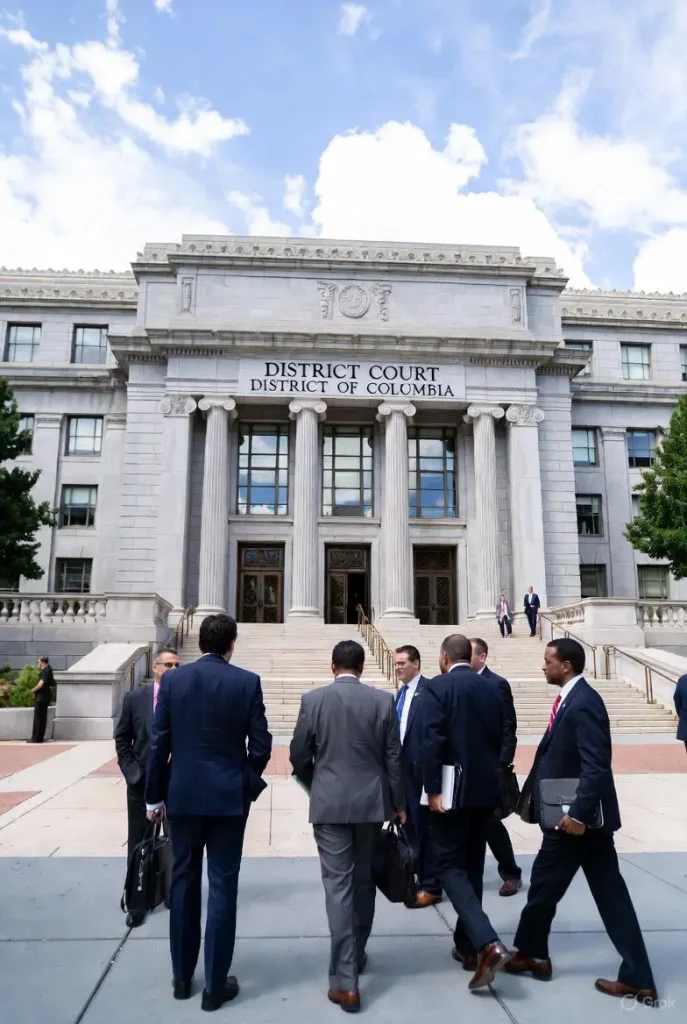
The policy’s global tremors have ignited fierce opposition stateside, none louder than from the United States Chamber of Commerce. On October 16th, the nation’s largest business lobby, representing 300,000 firms, sued the Trump administration in the U.S. District Court for the District of Columbia, arguing the fee unlawfully overrides Congress’s authority under the Immigration and Nationality Act and violates the Administrative Procedure Act by bypassing public comment. Senior Judge Beryl Howell, an Obama appointee, is slated to hear arguments before the Christmas break.
Leading the charge are Chamber litigators Neil Bradley, Executive Vice President and Chief Policy Officer, who decried the fee as a “deterrent to investment,” and Janet Kavinoky, Senior Vice President of Immigration Policy and Advocacy, who emphasized its threat to “global talent pipelines.”

Separate suits from 19 states (led by California AG Rob Bonta) and a coalition of unions and religious groups echo these claims, warning of offshoring and humanitarian fallout. “This fee doesn’t protect American workers; it exports jobs,” Bradley stated in court filings. During a recent Teams meeting, the US Chamber’s legal reps stated they felt confident of prevailing before Judge Howell and would prepare to counter the government potentially asking the court to stay the decision if granted.
A Crossroads for Global Mobility
 As the D.C. courtroom battle looms, Filipino specialists navigate uncertainty. Advocacy groups like the Philippine Overseas Employment Administration urge diversification (Canada’s Global Talent Stream processed 10,000 tech visas in 2025 at minimal cost) while U.S. employers lobby for exemptions in “national interest” fields like rural healthcare. Yet for many, the damage is done. Delayed careers, fractured families, and an economy teetering on lost remittances.
In a global talent war, Trump’s H-1B gambit may safeguard some U.S. wages but at the expense of innovation and equity. As Reyes, the Cebu coder, puts it: “America built its tech empire on our backs. Now, they’re building a wall, with a huge price tag to get through the single gate.” For Filipino dreamers, the question isn’t just affordability, it’s whether the gate fee will be dropped before it’s too late.